
Sanctions screening on a crypto sale in the UAE: what is checked and what stops a payout
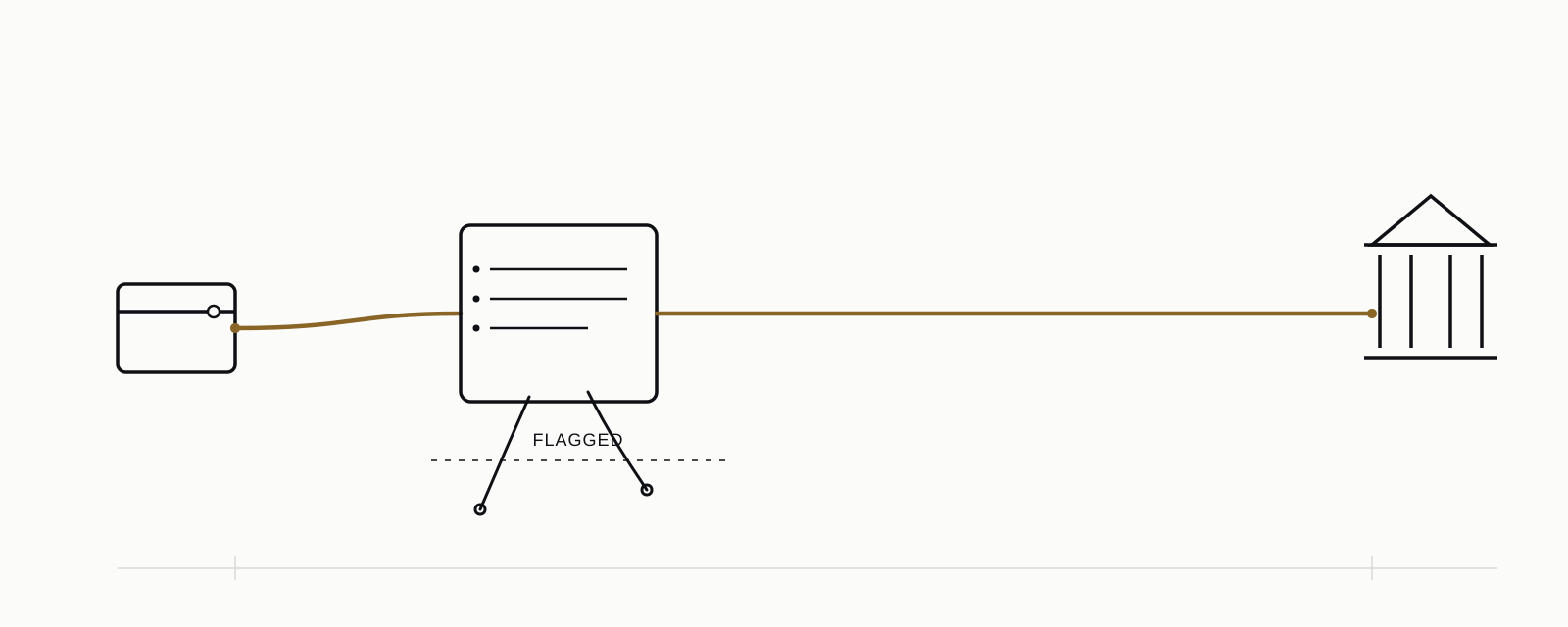
Sanctions screening on a UAE crypto sale checks two things: the wallet's on-chain history and the identity of everyone in the payment chain. A VARA-licensed desk screens the wallet and the client; the receiving bank screens the payment separately. A match, a data gap or a suspicious pattern can pause or stop the payout until reviewed.
KEY FACTS
| Regulator | VARA (desk conduct); CBUAE (bank payment screening) |
|---|---|
| What is screened | Wallet address exposure and sender/recipient identity |
| Who screens it | Licensed desk (wallet, client) and receiving bank (payment) |
| Sanctions lists used | UN Security Council list; UAE Local List (EOCN); OFAC SDN where USD/correspondent banking applies |
| Travel rule | Sender and recipient data must travel with the transfer |
| Source | VARA Compliance and Risk Management rulebook, as of September 2026 |
Source: VARA rulebooks and CBUAE published guidance, as of September 2026.
What is sanctions screening on a UAE crypto sale?
Sanctions screening on a UAE crypto sale is the set of checks a licensed desk and the receiving bank run before releasing funds, confirming that neither the wallet nor any party to the payment appears on a sanctions list. It combines blockchain analysis of the wallet with identity checks on the client and the bank. VARA's Compliance and Risk Management rulebook requires every licensed Broker-Dealer, Exchange and Custodian to run this screening and keep records.
Screening happens at three points — the wallet, the counterparty, and the bank transfer — each against a different list. A bank cannot see what a desk has already cleared; the two run in parallel, not in sequence.
What does wallet screening check?
Wallet screening checks the crypto address you are selling from for exposure to sanctioned entities, before a licensed desk accepts the trade. On-chain analytics tools trace a wallet's transaction history against the OFAC Specially Designated Nationals (SDN) list, sanctioned jurisdictions, and known mixer or darknet-market addresses. A direct or close indirect link to any of these can stop the trade before it starts.
Exposure is measured in degrees of separation, not just direct receipt. A wallet that received funds several hops from a sanctioned address carries lower but non-zero risk, and desks apply their own thresholds to decide when it needs enhanced due diligence on a large sale rather than an outright refusal.
How do banks and desks screen the counterparty?
Counterparty screening checks the names of the sender, client and recipient against sanctions lists, separately from the wallet check. A licensed desk screens the client at onboarding and each trade; the receiving bank, supervised by the Central Bank of the UAE, screens the beneficiary and any correspondent bank.
Three lists matter in the UAE. The United Nations Security Council Consolidated List is the baseline every institution screens against. The UAE Local Terrorist List, maintained by the Executive Office for Control and Non-Proliferation (EOCN), adds domestically designated names. Where a payment settles in US dollars through an American correspondent, OFAC's SDN list applies too — one reason UAE banks treat inbound crypto-linked payments with more scrutiny than a routine salary transfer.
A name match does not always mean a real hit. Common names produce false positives regularly, and a licensed institution holds the payment for manual review rather than releasing or rejecting it automatically.
What is the travel rule and why does it matter?
The travel rule requires the sender's and recipient's identifying information to accompany a virtual-asset transfer between institutions, the same way it already applies to bank wires. VARA's Compliance and Risk Management rulebook makes travel-rule compliance a standing obligation alongside sanctions screening for every licensed Broker-Dealer, Exchange and Custodian.
A transfer that arrives without this data cannot be screened properly, and a licensed desk holds or returns it rather than completing settlement.
What actually stops a payout?
Five patterns stop or delay a payout during sanctions screening, listed roughly in order of severity.
- Wallet exposure. The address has direct or close indirect exposure to an OFAC SDN-listed address, a sanctioned jurisdiction, or a known mixer.
- Name match on a sanctions list. The sender, client or recipient name matches an entry on the UN, EOCN or OFAC list, pending manual review.
- Sanctioned-jurisdiction routing. The payment counterparty or the correspondent bank sits in a jurisdiction under broad sanctions.
- Missing travel-rule data. The incoming transfer lacks the required originator or beneficiary information.
- Split-transaction pattern. Several transfers just under a review threshold, arriving close together, read as an attempt to avoid detection.
None of these stops is necessarily final. A false positive clears once compliance confirms you are not the sanctioned individual; missing travel-rule data can sometimes be supplied later. A genuine wallet hit on the SDN list is very unlikely to clear.
What should you prepare before a large sale?
Preparing the right paperwork before a large sale shortens screening, not avoids it. A source-of-funds file lets compliance clear routine checks quickly instead of chasing you for evidence mid-trade.
- Trade history. Exchange statements or on-chain records showing how the position was acquired.
- Wallet statement. An export from the sending wallet covering enough history to show the funds are not a single unexplained inbound transfer.
- Identity documents. Passport and proof of address for an individual; trade licence and ownership documents for a company.
None of this replaces the desk's own screening — it removes the delay of the desk asking for evidence mid-review. Onboarding with these documents ready typically completes within one business day.
What is screened at each stage of a crypto sale?
Three separate checks run on a typical UAE crypto sale, each against a different list and a different party.
| Stage | Who screens it | What is checked | Primary list or source |
|---|---|---|---|
| Wallet / address | Licensed desk (on-chain analytics) | Exposure to sanctioned addresses, jurisdictions, mixers | OFAC SDN list, blockchain risk data |
| Client / counterparty | Licensed desk (onboarding and per trade) | Name matching of sender, client and recipient | UN Security Council list; UAE Local List (EOCN) |
| Bank payment | Receiving bank, under CBUAE supervision | Beneficiary and correspondent-bank exposure | UN list; UAE Local List; OFAC SDN (USD flows) |
The wallet, the client and the bank payment are screened independently, so clearing one check does not clear the others.
The bottom line on sanctions screening for a UAE crypto sale
Sanctions screening on a UAE crypto sale is a standing legal requirement, not optional paperwork, for the desk and the bank on both sides of the trade. A clean wallet, accurate counterparty details and complete travel-rule data get a large sale through screening without drama. IWGT publishes its spread by ticket size openly, and a prepared client's account is usually approved within one business day.
FAQ
Does every crypto sale in the UAE go through sanctions screening?
Yes. A VARA-licensed desk screens the wallet and the client on every trade, and the receiving bank screens the payment separately under CBUAE oversight. Screening depth scales with size, but the check is not optional at any size.
What happens if my name produces a false-positive match?
The payment is held while compliance manually confirms you are not the sanctioned individual, usually by comparing date of birth and nationality. Common names generate these matches.
Can a split-transaction pattern block a payout even if the money is clean?
Yes. Several transfers arriving just under a review threshold in a short window read as an attempt to avoid detection, regardless of intent, and trigger a manual review.
Does sanctions screening apply if I am not settling in US dollars?
Yes. The UN Security Council list and the UAE's own sanctions list apply to every payment regardless of currency. OFAC exposure is an additional layer that applies where a US dollar payment routes through an American correspondent bank.
How long does a sanctions review take?
A routine screen clears within the trade itself, with no visible delay. A manual review for a name match or missing travel-rule data typically takes a few hours to a few business days, depending on how quickly documents arrive.
Can I avoid a screening hold by using an unlicensed platform?
No. An unlicensed platform skips its own screening, but the receiving bank still screens the incoming payment. Banks in the UAE routinely freeze transfers from unlicensed sources, which is worse than a documented review.
Trade through a desk that screens correctly the first time
IWGT is a VARA-licensed Broker-Dealer in Dubai, licence VL/24/12/002. We screen the wallet and the client on every trade and settle AED by UAEFTS the same business day once your account is approved.
SOURCES
- VARA rulebooks — Compliance and Risk Management rulebook (AML and sanctions screening rules), accessed 17 September 2026.
- VARA public register — licence status check, accessed 17 September 2026.
- Central Bank of the UAE rulebook — AML/CFT guidelines for financial institutions — sanctions screening obligations of licensed banks, accessed 21 September 2026.
- Executive Office for Control and Non-Proliferation (EOCN) — targeted financial sanctions — UAE Local Terrorist List and UN Consolidated List, accessed 21 September 2026.
- OFAC Sanctions List Search — search tool for the Specially Designated Nationals (SDN) list, accessed 21 September 2026.
This guide is informational and is not legal, tax or investment advice, nor an invitation to buy or sell any virtual asset. Rules and figures are as of September 2026 — re-check the sources before acting. Virtual assets may lose their value in full or in part and are subject to extreme volatility.