
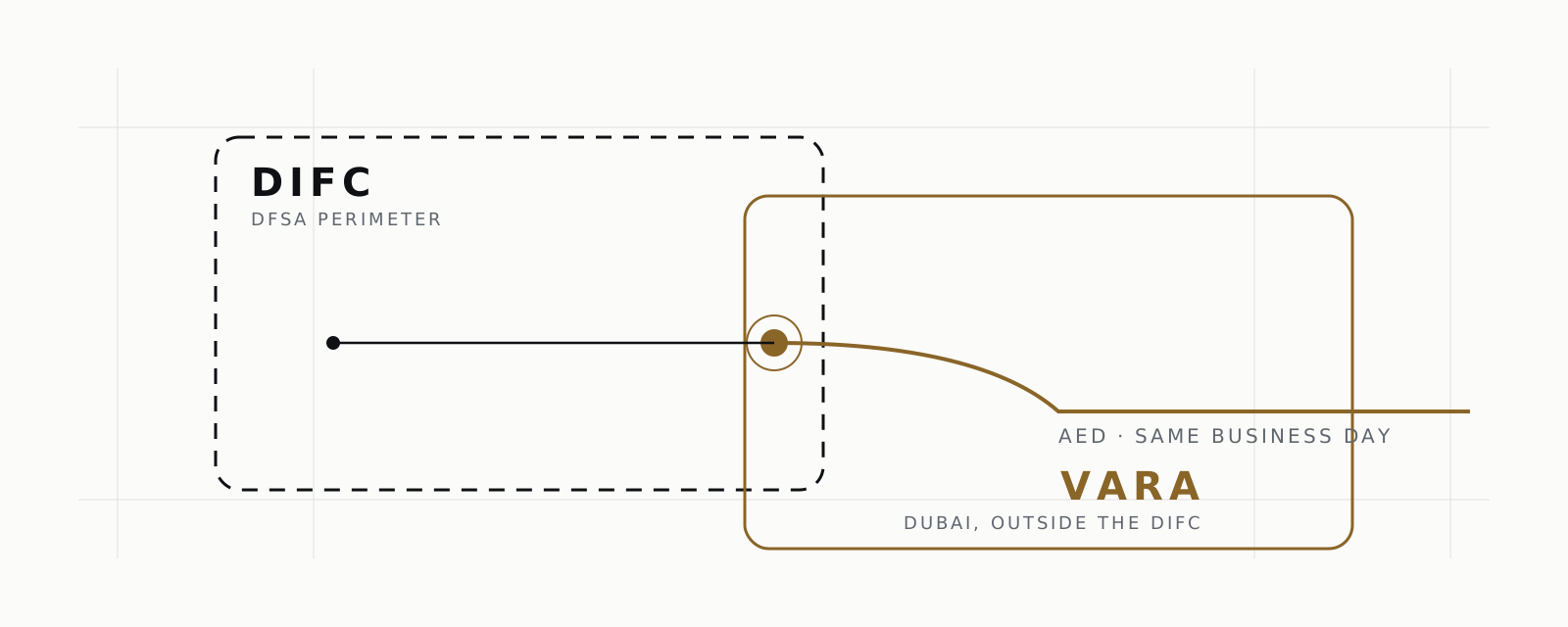
Selling USDT as a DIFC-based client: which perimeter applies and who settles
A company registered in the DIFC that sells USDT to a Dubai desk such as IWGT deals with a VARA-licensed Broker-Dealer, not the DFSA, because the trade settles outside the DIFC perimeter. The DIFC's own regulator applies only to financial activity conducted inside the district itself.
KEY FACTS
| Client jurisdiction | DIFC (Dubai International Financial Centre) |
|---|---|
| DIFC regulator | DFSA (Dubai Financial Services Authority) |
| Desk's regulator | VARA (Dubai, outside the DIFC) |
| IWGT licence | VARA Broker-Dealer, VL/24/12/002 |
| AED settlement | Same business day, by UAEFTS |
| USD settlement | 2–5 business days, by SWIFT |
Source: DFSA, DIFC and VARA official publications, IWGT pricing bands, as of September 2026.
What is the DIFC perimeter, and why does it matter for a USDT sale?
The DIFC — the Dubai International Financial Centre — is a financial free zone inside Dubai with its own common-law courts and regulator, the DFSA, separate from the rest of the emirate. A desk operating outside the district, such as the one behind selling USDT in Dubai, answers to VARA rather than the DFSA, regardless of where the client is registered.
A DIFC company selling USDT is a client of a VARA-regulated firm, not a DFSA-regulated one, provided the trade settles outside the district. The distinction sits in where the desk operates, not where the client is incorporated. See the DIFC glossary entry for the district's legal background.
Does a VARA-licensed desk apply when the client is a DIFC company?
Yes, in the ordinary case: when a DIFC-registered company instructs a VARA-licensed Broker-Dealer such as IWGT, and the trade settles outside the DIFC, it follows VARA's rulebook, not the DFSA's. Dubai Law No. 4 of 2022, which created VARA, covers virtual-asset activity across Dubai with one carve-out — the DIFC.
VARA's framework covers licensing, custody, market conduct and settlement standards for firms like ours — see our VARA framework explainer. A DFSA licence, by contrast, authorises activity only inside the DIFC boundary and says nothing about a trade executed elsewhere.
This is a general explanation, not a legal opinion on any specific structure. A DIFC entity with a complex mandate — a regulated fund, say, or a DFSA-licensed firm — should confirm the position with a compliance consultant. Either way, verify the licence number in VARA's public register before sending funds.
How does settlement work for a DIFC company's bank account?
A DIFC-registered company holds accounts at ordinary UAE banks like any mainland or free zone company, and a licensed desk pays AED into that account by UAEFTS the same business day the trade settles. USD payments go by SWIFT and take 2 to 5 business days.
IWGT pays only to an account in the client's own name — no exceptions for third-party accounts, DIFC or otherwise. Opening the account needs the same know-your-business file any UAE company provides: trade licence, shareholder and ownership documents, and proof of address for authorised signatories. The full list is in our guide to documents needed to sell USDT in the UAE.
Approval typically takes one business day once documents are in. Submitting them before the day you need to trade, through the onboarding section of our main page, is the fastest way to have same-day settlement ready.
DIFC, Dubai outside the DIFC and ADGM: how the three perimeters compare
Dubai and Abu Dhabi run three separate regulatory perimeters relevant to a USDT sale. The table below sets out the regulator, legal basis and licence register for each.
| Attribute | VARA / Dubai (outside DIFC) | DFSA / DIFC | FSRA / ADGM |
|---|---|---|---|
| Jurisdiction | Dubai, all areas except the DIFC | DIFC free zone, Dubai | ADGM free zone, Abu Dhabi |
| Mandate | Virtual assets only | All financial services | All financial services |
| Legal basis | Dubai Law No. 4 of 2022 | DIFC laws (English common law) | FSMR 2015 (English common law) |
| Virtual-asset regime since | 2022 | Case-by-case token recognition | 2018 |
| Licence register | VARA public register | DFSA public register | ADGM public registers |
| IWGT's perimeter | Licensed here (VL/24/12/002) | Not applicable | Not applicable |
A DIFC company can sit inside one perimeter for its own regulation while trading with a desk licensed in another — the desk's perimeter is what governs the sale.
For the wider map of onshore, DIFC and ADGM rules across both emirates, see our comparison of Dubai and Abu Dhabi crypto regulation.
How is the DIFC different from the ADGM?
The DIFC and the ADGM are both common-law financial free zones with their own courts, but they are not interchangeable. The DIFC is in Dubai and regulated by the DFSA; the ADGM is in Abu Dhabi and regulated by the FSRA, a separate authority with its own licence register — see the FSRA glossary entry. A firm licensed in one free zone has no standing in the other.
When does a DIFC company need its own licence or compliance advice?
A DIFC company selling USDT through an outside desk in the ordinary course does not itself need a DFSA licence — it is a client, not a regulated-activity provider. The position changes if the company offers financial services involving crypto assets to others from inside the DIFC, or is itself a DIFC-regulated fund trading USDT as part of its strategy; that activity falls under the DFSA's regime. None of this is a legal conclusion — confirm any specific structure with a qualified compliance consultant before relying on it.
Worked example: a DIFC treasury selling USDT
Worked example, as of September 2026: a treasury entity registered in the DIFC sells 500,000 USDT through IWGT. At the 500,000-tier spread of 0.25%, published in our pricing bands, the arithmetic is: 500,000 USDT at the 3.6725 peg is AED 1,836,250 gross; the 0.25% spread costs AED 4,591, leaving about AED 1,831,659 net.
The desk pays this by UAEFTS to the treasury entity's own UAE bank account the same business day, exactly as for a mainland or free zone company — DIFC registration changes neither the rail nor the timing, only which regulator the client answers to for its own activities. For tickets larger than this example, selling larger USDT amounts brings additional source-of-funds checks regardless of jurisdiction.
The bottom line for a DIFC-based seller
A DIFC-registered company selling USDT to a VARA-licensed desk outside the district follows VARA's rules, receives AED by UAEFTS the same business day, and provides the same know-your-business file any UAE company would. Where the structure is more complex than a straightforward sale, get compliance advice first. Request a quote once your documents are ready.
FAQ
Does a DIFC company need a DFSA licence to sell USDT to an OTC desk?
No, not for a straightforward sale. Selling USDT to a VARA-licensed desk that settles outside the DIFC is a client transaction, not a DFSA-regulated activity. A DFSA licence only matters if the DIFC company itself provides financial services involving crypto assets.
Is the DIFC regulated by VARA?
No. VARA's jurisdiction under Dubai Law No. 4 of 2022 covers virtual assets across Dubai with one exception, the DIFC, where the DFSA is the sole financial regulator. A desk operating inside the DIFC would need DFSA authorisation, not a VARA licence.
Can a DIFC company's bank account receive AED the same day from a USDT sale?
Yes. A licensed desk pays AED by UAEFTS to the company's own UAE bank account, and DIFC incorporation does not change the rail or the same-day timing. USD payments go by SWIFT and take 2 to 5 business days.
Is the DIFC the same as the ADGM?
No. Both are common-law financial free zones with their own courts, but the DIFC is in Dubai under the DFSA and the ADGM is in Abu Dhabi under the FSRA, separate regulators with separate licence registers.
What documents does a DIFC company need to sell USDT?
The same know-your-business file any UAE company provides: trade licence, shareholder and ownership documents, and proof of address for authorised signatories. Approval typically takes one business day once documents are complete.
Sell USDT from a DIFC entity with same-day settlement
IWGT is a VARA-licensed Broker-Dealer in Dubai (VL/24/12/002). All-in spread 0.08–0.40% by ticket size, published openly. AED reaches your own DIFC-linked UAE bank account by UAEFTS the same business day once your account is approved.
SOURCES
- Dubai International Financial Centre — official portal, accessed 18 September 2026.
- Dubai Financial Services Authority — official site, accessed 18 September 2026.
- VARA public register — licence status check, accessed 18 September 2026.
- Dubai Law No. 4 of 2022 — Dubai legal portal, accessed 18 September 2026.
- IWGT published pricing bands and onboarding requirements — IWGT published pricing bands, September 2026.
This guide is informational and is not legal, tax or investment advice, nor an invitation to buy or sell any virtual asset. It is a general explanation of how the DIFC, Dubai and ADGM perimeters interact and is not a legal opinion on any specific corporate structure — for complex or regulated DIFC entities, confirm the position with a qualified compliance consultant. Rules and figures are as of September 2026 — re-check the sources before acting. Virtual assets may lose their value in full or in part and are subject to extreme volatility.