
Selling USDT in the UAE as a non-resident: what a desk can and cannot settle
A VARA-licensed desk in Dubai can onboard a non-resident with a passport, proof of address abroad and a source-of-funds file — no Emirates ID or UAE bank account is needed to trade. Settlement goes only to an account in your own name, so the practical question is where that account sits: abroad by SWIFT, or in the UAE.
KEY FACTS
| Regulator | VARA (Dubai, outside the DIFC) |
|---|---|
| Emirates ID to trade | Not required at a licensed desk; required by most UAE banks |
| Settlement destination | Bank account in the seller's own name only — UAE or abroad |
| Foreign USD, EUR or GBP account | 2–5 business days by SWIFT |
| UAE AED account | Same business day by UAEFTS |
| IWGT spread | 0.08%–0.40%, by ticket size |
Source: IWGT onboarding requirements and published pricing bands; VARA Rulebooks, as of September 2026.
Can a non-resident sell USDT at a licensed desk in Dubai?
A non-resident can sell USDT at a VARA-licensed desk in Dubai without an Emirates ID or a UAE bank account. The VARA Compliance and Risk Management Rulebook requires the desk to identify and verify every client, and residency is not one of the tests. The file for an individual is a passport, proof of address in the country you live in, and evidence of where the USDT came from.
The full document list is in our onboarding section; approval usually takes one business day once the file is complete. A non-resident file can take longer to review when the address and source-of-funds evidence is foreign or needs translation, so allow time beyond the one-business-day norm. The desk's flow starts at around 100,000 USDT, so a visitor changing holiday money is not the client this route serves.
Where can a non-resident's USDT sale be paid out?
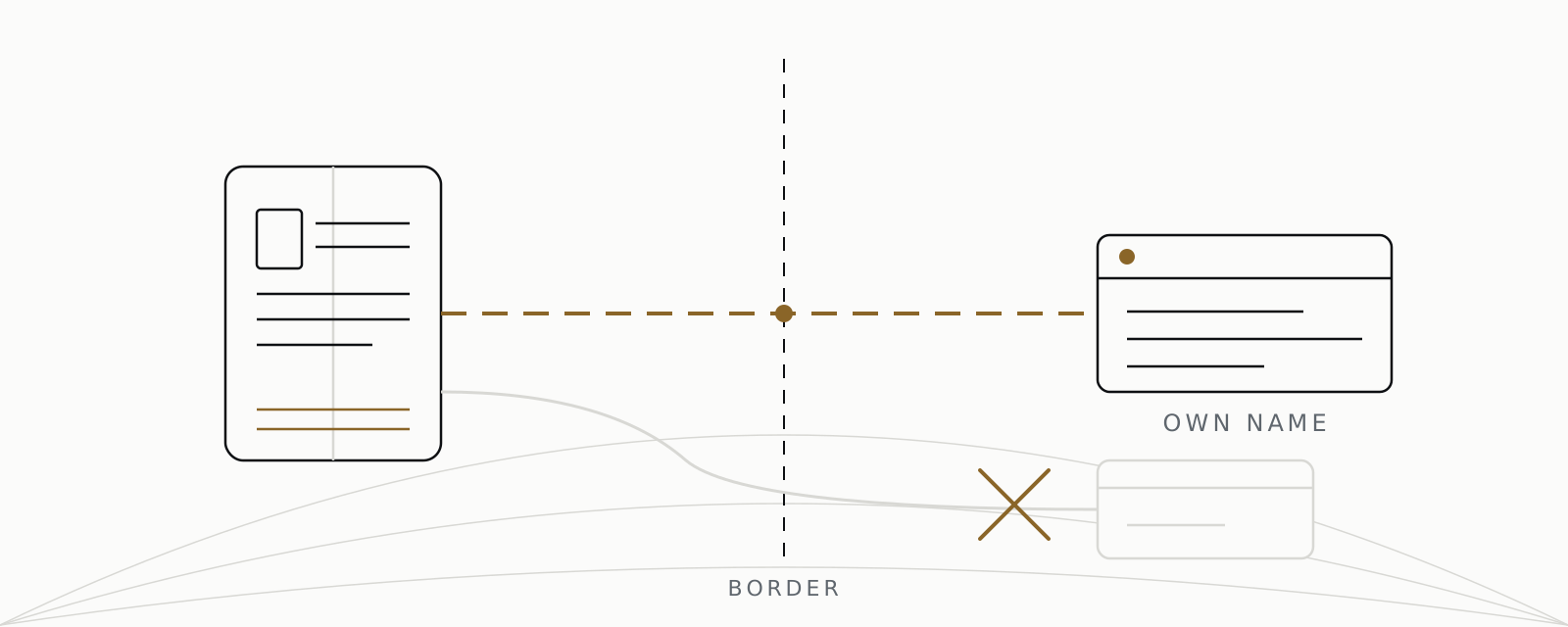
A non-resident's USDT sale at a licensed desk is paid to one place only: a bank account in the seller's own name. The rule comes from VARA's anti-money-laundering requirements and from the banks at the same time, and it holds whether the account is in Dubai, London or Singapore. Everything else — cash for a six-figure sum, a friend's account, a company account, a card — is outside what a licensed desk can do.
| Settlement destination | Feasible? | Rail | Time to credit | Notes |
|---|---|---|---|---|
| UAE AED account in your name | Yes, if you hold one | UAEFTS | Same business day | Most UAE banks ask for an Emirates ID before opening it |
| Foreign USD account in your name | Yes | SWIFT | 2–5 business days | Correspondent banks screen crypto-related inbound wires |
| Foreign EUR or GBP account in your name | Yes | SWIFT | 2–5 business days | Agree the currency with the desk before the quote |
| Cash payout | No | — | — | Not offered at desk size; no paper trail for the receiving bank |
| Third-party account, company account or card | No | — | — | Own-name rule; a card is a payment rail, not a settlement account |
Every feasible row ends in an account carrying your own name; the only choices left to you are the country and the currency.
Cards fail on two counts at once: the account behind a card is rarely verifiable as yours, and push-to-card rails carry limits far below a desk ticket — the detail is in our guide on why cards are wrong for large settlements. Destinations in sanctioned or restricted jurisdictions, including the Russia corridor, are subject to UAE and correspondent-bank restrictions; the desk tells you at onboarding whether a destination can be paid at all.
How does settlement to a foreign bank account work?
Settlement to a foreign bank account works by SWIFT: the desk converts your USDT and its bank sends USD, EUR or GBP to your account abroad through one or more correspondent banks. As of September 2026 IWGT quotes 2–5 business days for a USD wire; EUR and GBP wires run on similar timelines. Cut-off times and charge options are covered in our guide to SWIFT wires from the UAE.
Correspondent banks screen inbound wires linked to virtual-asset trades more closely than ordinary transfers. A wire from a licensed Dubai desk with a clean payment reference and a trade confirmation behind it clears faster than one from an unknown originator. Tell your receiving bank in advance that a wire from a virtual-asset sale is coming — a surprised compliance team is the most common cause of a hold.
Agree the currency before you trade, not after. A USD account receiving a EUR wire pays a second conversion at the bank's own rate, and that cost is usually larger than the desk spread.
What does 250,000 USDT to a foreign account cost?
Selling 250,000 USDT for USD to a foreign account at the 0.40% band — the published band for tickets from 100,000 USDT, as of September 2026 — costs USD 1,000 at the desk, and the wire goes out for USD 249,000. In dirham terms, at the 3.6725 peg, the ticket is worth AED 918,125, the spread is AED 3,673 and the wire equals AED 914,453. The spread bands by ticket size are published on the pricing section of the main page; a firm quote can price inside the band.
Timeline, as of September 2026: quote accepted and USDT received on a Monday morning; wire released the same or the next business day; credit at your foreign bank between Wednesday and the following Monday. Correspondent charges, if the wire travels with shared fees, come off the credited amount and vary by bank.
Can a non-resident open a UAE bank account for AED?
Some UAE banks offer non-resident accounts, usually a savings product rather than a current account, on terms each bank sets itself — minimum balance, documents and review time — so check the bank's own product page before relying on one. The Emirates ID is the document most UAE banks ask for, and the UAE Government portal describes it as the identity card issued to citizens and residents — a visitor does not hold one.
If the account exists and carries your name, the desk pays AED into it by UAEFTS the same business day. The bank then runs its own review of a large inbound credit from a virtual-asset sale, and a non-resident account tends to be reviewed harder; what those teams look for is set out in our guide to UAE banks and crypto inflows.
New residents sit between the two cases. A Golden Visa or employment visa in progress does not yet give you an Emirates ID, so most banks will not open a full account until the card is issued. Trading at the desk can start earlier, with settlement to your foreign account, and switch to AED once the UAE account is live.
What extra checks does a non-resident face?
A non-resident is placed in a higher risk category by a UAE desk and by any UAE bank, so enhanced due diligence applies from the first ticket. The VARA Compliance and Risk Management Rulebook requires enhanced measures for higher-risk clients, and a foreign address, a foreign receiving account and a first-time relationship each add to that score. What the review contains, and how to clear it, is in our guide to enhanced due diligence on large conversions.
Expect three declarations that residents rarely think about. A tax-residency self-certification under the OECD Common Reporting Standard, which the UAE participates in; a FATCA declaration if you are a US person; and proof of address abroad dated within the last 90 days. None is a barrier — each is a form — but a missing one stops the file.
In what order should a non-resident set this up?
A non-resident sale runs smoothly when the four pieces are arranged in this order, most of them before you land in Dubai:
-
STEP 1
Onboard before you travel
Submit the passport, proof of address and source-of-funds evidence remotely; approval follows in one business day once the file is complete. Arriving in Dubai with an unopened file wastes the trip.
-
STEP 2
Agree the currency and the rail
Name the receiving account, its currency and its country in writing before the first quote. The desk confirms that the destination can be paid and which charge option the wire will carry.
-
STEP 3
Warn the receiving bank
Tell your bank abroad that a wire from a virtual-asset sale is coming, quote the desk's VARA licence number, and have the trade confirmation ready to forward the same day.
-
STEP 4
Trade on a banking day
The desk deals 24/7; the wire leaves on a banking day. A ticket released before the correspondent cut-off starts moving the same day; one released on a Thursday afternoon can lose the weekend at both ends.
The bottom line on selling USDT as a non-resident
Selling USDT in the UAE as a non-resident is a question of destination, not permission. A VARA-licensed desk will onboard you on a passport, a foreign address and a source-of-funds file, and will pay only to an account in your own name. Bring that account — abroad by SWIFT, or in the UAE once a bank opens one — and the rest is the same trade every resident makes.
FAQ
Do I need an Emirates ID to sell USDT in Dubai?
No. A VARA-licensed desk verifies you with a passport, proof of address and source-of-funds evidence. The Emirates ID matters at the bank: most UAE banks require it, so without one your settlement usually goes to an account abroad.
Can the desk pay a friend or my company instead of me?
No. A licensed desk settles only to an account in the seller's own name. A company account works only when the company itself is the onboarded client and sells from its own wallet.
Can I take cash for a large USDT sale as a visitor?
Not from a bank-settled desk at desk size. A large cash payout leaves no paper trail for the bank that later receives the money, and it sits outside what a licensed desk offers. A wire to your own account is the route.
How long does a wire to my bank abroad take?
USD wires take 2–5 business days by SWIFT as of September 2026; EUR and GBP run on similar timelines. Releasing before the correspondent cut-off and warning your receiving bank in advance shortens the wait.
Can a Golden Visa applicant trade before the Emirates ID arrives?
Yes. Trading depends on the desk file, not on residency. Settlement goes to your foreign account until a UAE bank account in your name is open, then switches to AED by UAEFTS the same business day.
Sell USDT as a non-resident, settled to your own account
IWGT is a VARA-licensed Broker-Dealer in Dubai (VL/24/12/002). Non-residents onboard with a passport, foreign proof of address and a source-of-funds file; spread 0.08–0.40% by size; USD, EUR or GBP by SWIFT to your own account abroad, or AED by UAEFTS to a UAE account in your name.
SOURCES
- VARA Rulebooks — Compliance and Risk Management Rulebook (client due diligence, enhanced measures for higher-risk clients), accessed 16 September 2026.
- UAE Government portal — Emirates ID, accessed 16 September 2026.
- UAE Government portal — Combatting money laundering, accessed 16 September 2026.
- SWIFT gpi — cross-border payment tracking, accessed 16 September 2026.
- IWGT onboarding requirements and published pricing bands — IWGT published pricing bands, September 2026.
This guide is informational and is not legal, tax or investment advice, nor an invitation to buy or sell any virtual asset. Rules and figures are as of September 2026 — re-check the sources before acting. Virtual assets may lose their value in full or in part and are subject to extreme volatility.