
Crypto payroll for UAE companies: WPS, conversion and compliance
A UAE company holding USDT cannot pay salaries in it through WPS: mainland wages go out in dirhams through MOHRE-approved banks. The workable route is a corporate OTC account — sell USDT to a licensed desk, receive AED the same business day by UAEFTS, then run payroll as usual. Conversion costs 0.08–0.40% by size.
KEY FACTS
| Payroll currency | AED, through WPS-approved banks and exchange houses (MOHRE-registered employers) |
|---|---|
| WPS due date | 1st of the following month; at least 85% of wages through WPS |
| Free zones | DIFC and ADGM outside MOHRE's WPS; other zones vary |
| Conversion regulator | VARA (Dubai), licence VL/24/12/002 |
| IWGT spread | 0.08%–0.40%, by monthly ticket size |
| AED settlement | Same business day (UAEFTS), to the company's own account |
Source: UAE Government portal (u.ae), MOHRE, VARA public register and IWGT published pricing bands, as of September 2026.
Can a UAE company pay salaries in crypto?
A UAE company cannot pay salaries in crypto through the Wage Protection System (WPS): the Ministry of Human Resources and Emiratisation (MOHRE) and the Central Bank of the UAE require mainland employers to pay wages in dirhams through WPS-approved banks and exchange houses. Under the UAE Labour Law (Federal Decree-Law No. 33 of 2021) and MOHRE's Wage Protection System rules (Ministerial Resolution No. 340 of 2026), wages are paid in dirhams unless the employment contract agrees another currency, and every MOHRE-registered establishment must pay through WPS, as of September 2026. A USDT transfer to an employee's wallet is invisible to that system, so on MOHRE's record the wage is unpaid.
Free zones vary. The DIFC and ADGM run their own employment laws outside MOHRE's system; other free zones set their own payroll rules, and some require WPS or an equivalent zone payroll file, so confirm the rule with the zone authority before designing the payroll.
The employee side — what a worker can accept in tokens and how a 2024 Dubai ruling treated a token clause — is covered in our guide to getting a salary in crypto in the UAE. This article stays with the employer: a company whose treasury sits in USDT and whose payroll must land in AED.
How does a company turn USDT into WPS payroll?
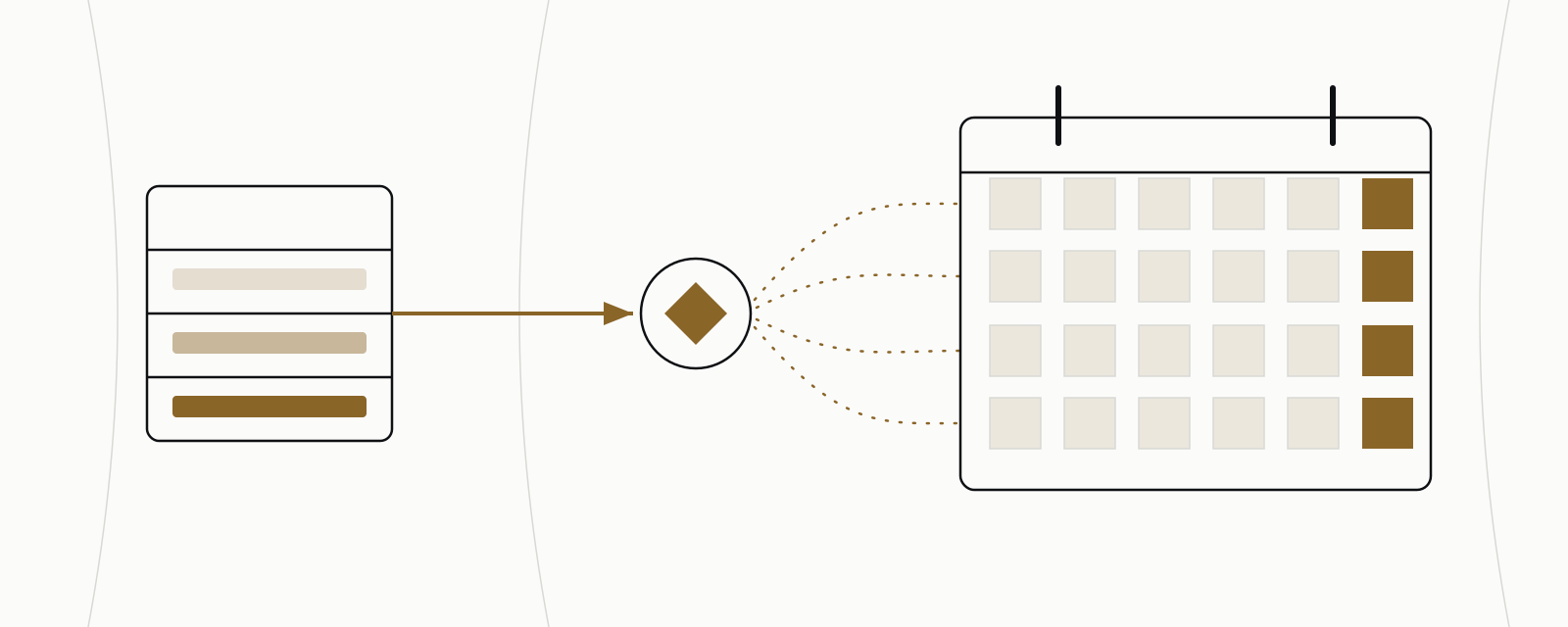
A company turns USDT into WPS payroll in three moves: sell the USDT to a VARA-licensed desk through a corporate account, receive AED in the company's own bank account by UAEFTS the same business day, and submit the Salary Information File (SIF) to the WPS bank as usual. Nothing in the payroll leg changes; only the funding leg does.
The corporate account is opened once. The file is the trade licence, memorandum of association, UBO register extract, a board resolution naming who may sell and where the money goes, the signatory's passport and Emirates ID, and a source-of-funds note for the USDT — client invoices, token sale agreements or protocol revenue. The full list is in our onboarding section; approval takes one business day in most cases when the file is complete.
Settlement goes only to an account in the company's own name. A desk that offers to pay staff wallets directly, or to wire a director's personal account, is offering the non-compliant route with extra steps.
-
STEP 1
Days 18–20: fix the AED payroll figure
HR closes the month's SIF total — wages, allowances, any end-of-service settlements. That dirham figure, not a USDT estimate, drives the sale.
-
STEP 2
Days 21–24, Monday to Thursday: quote and sell
The dealer returns one all-in price at any hour. The company accepts in writing and sends USDT from its treasury wallet.
-
STEP 3
Same business day: AED lands by UAEFTS
Agreed in the morning, the settlement reaches the corporate account before the bank's cut-off. The deal confirmation and the bank credit match to the dirham.
-
STEP 4
Days 25–30: fund the WPS bank and submit the SIF
The payroll bank debits the account and credits staff. Wages fall due on the 1st of the following month, as of September 2026.
-
STEP 5
Days 1–5: reconcile
Book the deal confirmation, the bank credit and the WPS payment report together. MOHRE can suspend new work permits from the fifth day after the due date if wages are late.
What does crypto payroll cost by payroll size?
Crypto payroll costs the desk's spread on the dirham's 3.6725 peg to the US dollar, and the spread falls as the monthly ticket grows: 0.40% from 100,000 USDT, 0.25% from 500,000, 0.15% from 2,000,000 and 0.08% from 10,000,000, according to IWGT's published pricing bands, as of September 2026. The table converts three payroll sizes into USDT and cost.
| Monthly payroll (AED) | USDT to sell at 3.6725 | Spread tier | Cost (AED) | AED settlement |
|---|---|---|---|---|
| AED 500,000 | 136,147 USDT | 0.40% (100k tier) | AED 2,000 | Same business day |
| AED 2,000,000 | 544,588 USDT | 0.25% (500k tier) | AED 5,000 | Same business day |
| AED 10,000,000 | 2,722,940 USDT | 0.15% (2M tier) | AED 15,000 | Same business day |
The spread is the whole cost — no desk wire fee on AED and no VAT on the conversion — and the USDT column rises by the cost column, so an AED 500,000 payroll needs about 136,700 USDT in the wallet.
When should a company sell USDT for payroll?
A company should sell USDT for payroll on a Monday to Thursday morning in the last full bank week before wages fall due, because a morning trade on those days settles over UAEFTS the same day, with Friday held in reserve for anything that slips, as of September 2026. A Sunday trade settles Monday; a Thursday trade after the bank cut-off slides into a short Friday.
WPS wages are due on the first day of the following month under Ministerial Resolution No. 340 of 2026, and at least 85% of the payroll must clear through WPS by then. Selling between the 21st and the 25th leaves two to three bank days for a compliance query on the inbound AED before the SIF has to go. Ramadan hours and Eid holidays shorten the window, so confirm the day's cut-off with the dealer.
How is the USDT conversion booked and taxed?
The USDT conversion is booked at the deal rate on the trade confirmation: the USDT leaves the books at that AED value, and the difference from its carrying value is a realised gain or loss on its own FX line. Salaries are then an ordinary payroll expense, deductible against taxable profit.
Corporate Tax is 9% on taxable profit above AED 375,000, as of September 2026, so a treasury held in USDT contributes its gains and losses to the taxable result like any other asset; a Qualifying Free Zone Person may be taxed at 0% on qualifying income, which needs an adviser's view on whether treasury gains qualify. The Federal Tax Authority's Public Clarification VATP040 treats transfers and conversions of virtual assets as VAT-exempt, and salaries are outside the scope of VAT, so neither the desk's spread nor the payroll leg carries a VAT line.
Which crypto payroll routes go wrong?
The crypto payroll routes that go wrong in the UAE are the shortcuts: paying staff directly in USDT, and selling through an unlicensed desk. Both look cheaper for a month and cost more from the second.
- Paying wages in USDT to staff wallets: MOHRE's record shows the wage unpaid, which draws WPS penalties and a block on new work permits from the fifth day after the due date; employees then face bank questions about unexplained inflows when they cash out.
- Topping up an AED base with USDT "off payroll": the 85% WPS floor still applies to the contracted wage, and a contract that hides the split hands the employee a claim.
- Selling through an unlicensed desk or cash exchanger: no VARA licence means no recourse, and the company's bank can freeze the inbound AED as unlicensed crypto flow. Check the licence number against the register linked from our licence section.
- Settling to a director's personal account and transferring in: two hops instead of one, and a break in the source-of-funds trail the auditor will ask about.
How does a monthly OTC payroll programme work?
A monthly OTC payroll programme is a standing arrangement with the desk: the company states the expected AED payroll and value date each month, the desk prices each tranche by a written quote on the day, and the settlement instruction is fixed to the corporate account. The mechanics follow our guide to setting up a recurring selling programme.
The spread tier is set by each month's ticket, not the annual total, as of September 2026. A company paying AED 2,000,000 a month sits at the 0.25% tier; one that consolidates two months into a single sale above 2,000,000 USDT — about AED 7,345,000 — drops to 0.15%, at the price of holding stablecoin exposure for an extra month.
What a programme buys is predictability: the same dealer, a pre-agreed cut-off, one confirmation format the accountant already recognises, and a payroll date that no longer depends on which day the treasury was topped up.
FAQ
Can a UAE company pay salaries directly in USDT?
Not through WPS. Mainland wages must reach staff in dirhams through a MOHRE-approved bank or exchange house, and a USDT transfer counts as unpaid on MOHRE's record. A token component can sit in the contract on top of the AED wage, but the WPS line stays in dirhams.
What documents does a company need for an OTC payroll account?
Trade licence, memorandum of association, UBO register extract, a board resolution naming who may sell and the settlement account, the signatory's passport and Emirates ID, and a source-of-funds note for the USDT. With a complete file, approval takes one business day in most cases.
Does the company pay tax on the USDT conversion?
Not on the conversion itself. The gain or loss between the USDT's book value and the deal rate flows into accounting profit, taxed at 9% Corporate Tax above AED 375,000, as of September 2026. Salaries are a deductible expense and outside the scope of VAT.
Which day should a company sell USDT for payroll?
Monday to Thursday morning, in the last full bank week before wages fall due on the 1st. That leaves two to three bank days for any query on the inbound AED before the Salary Information File must go.
Can free zone companies use the same route?
Yes. The conversion is identical; what differs is the payroll rail. DIFC and ADGM employers pay under their own employment laws outside MOHRE's WPS, while other free zones apply WPS or a zone payroll file — confirm with the zone authority before the first run.
Fund payroll from a USDT treasury with same-day AED
IWGT is a VARA-licensed Broker-Dealer in Dubai, licence VL/24/12/002. Corporate accounts, all-in spread 0.08–0.40% by ticket size, AED by UAEFTS the same business day into the company's own account.
SOURCES
- UAE Government portal — payment of salaries and wages (WPS; Ministerial Resolution No. 340 of 2026; wages in AED or another currency agreed in the contract), accessed 21 September 2026.
- Ministry of Human Resources and Emiratisation (MOHRE) — Wage Protection System and Ministerial Resolution No. 340 of 2026, accessed 16 September 2026.
- Federal Tax Authority — Corporate Tax and VAT Public Clarification VATP040 (virtual assets), accessed 16 September 2026.
- VARA public register — licence status check, accessed 16 September 2026.
- IWGT published pricing bands and onboarding requirements — IWGT published pricing bands, September 2026.
This guide is informational and is not legal, tax or investment advice, nor an invitation to buy or sell any virtual asset. Rules and figures are as of September 2026 — re-check the sources before acting. Virtual assets may lose their value in full or in part and are subject to extreme volatility.