
What is the travel rule in crypto?
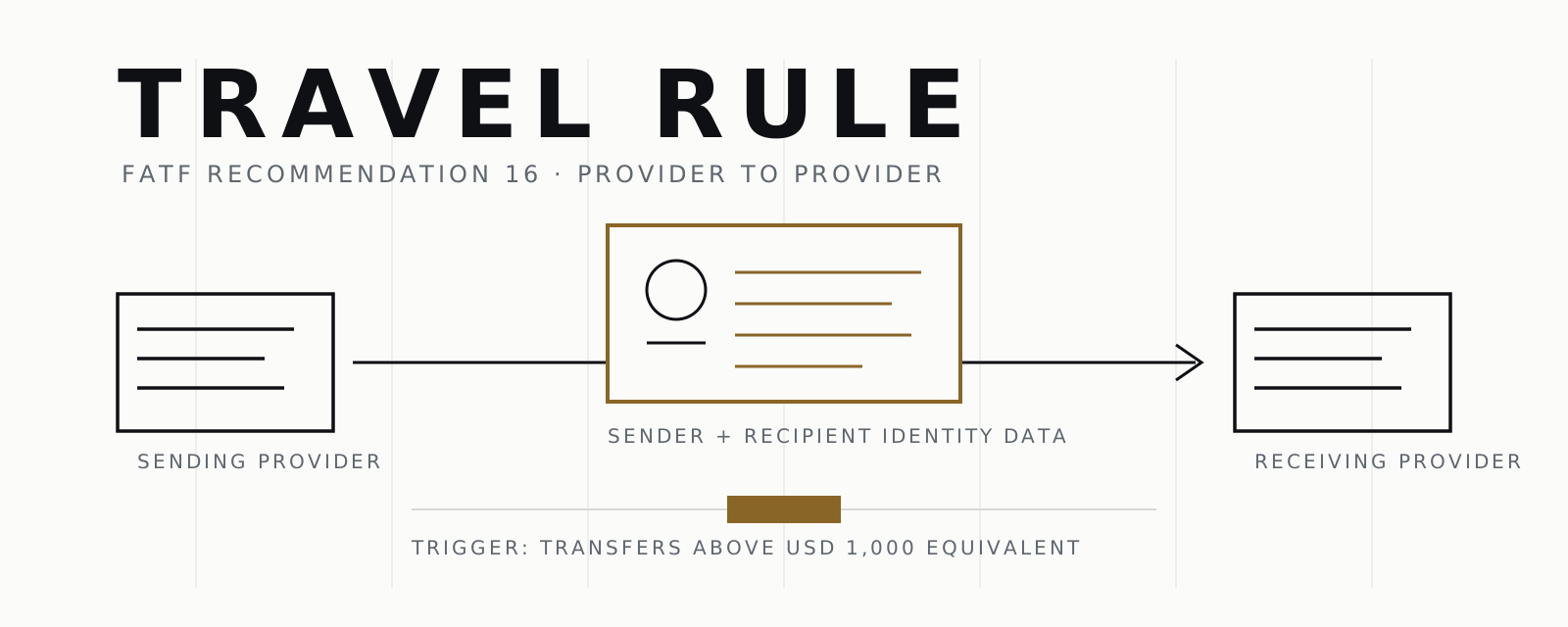
The travel rule is a global anti-money-laundering requirement — FATF Recommendation 16 applied to crypto — that obliges licensed providers to attach sender and recipient identity data to virtual-asset transfers above the UAE threshold of AED 3,500 (the FATF benchmark is USD 1,000), the way a bank wire carries names and account numbers.
KEY FACTS
| Formal name | FATF Recommendation 16 (the "travel rule") |
|---|---|
| Applies to | Transfers between two licensed providers (VASPs) |
| Threshold | AED 3,500 in the UAE (FATF benchmark USD 1,000) |
| Data that travels | Names and account or wallet identifiers of sender and recipient |
| Enforcer in Dubai | VARA rulebooks (outside the DIFC) |
Source: FATF Recommendation 16 and VARA rulebooks, as of September 2026.
How does the travel rule work in the UAE?
The rule binds licensed providers, not their clients: when a transfer above the threshold moves between two regulated firms, the sending firm passes sender and recipient details to the receiving firm with or before the transfer. In Dubai outside the DIFC, VARA enforces it through its rulebooks as part of the wider AML framework, as of September 2026. The data comes from the account file submitted at onboarding, and the providers exchange it automatically.
What data travels with a transfer?
The originator's full name, account number or wallet identifier and one real-world identifier (address, identity or customer number, or date and place of birth), plus the beneficiary's full name and account or wallet identifier. This moves provider to provider, off-chain. Self-hosted wallets have no second provider, so a licensed desk verifies wallet ownership instead, by a signed message or a small test transaction, never your seed phrase.
Why it matters when selling USDT in the UAE
It makes a licensed payout legible to your bank: identity data accompanies the crypto leg in, and the desk's own-name AED wire out matches it. The record starts with the KYC check behind your account, so completing it before trade day keeps settlement same-day; larger tickets can add evidence requests, covered in proving source of funds for crypto.
Illustrative example
On a 250,000 USDT sale from an exchange account at a 0.25% spread against the 3.6725 peg, the exchange attaches your details as originator and the desk's as beneficiary, the desk screens the sending wallet, and you receive roughly AED 915,830 (AED 918,125 less AED 2,295) by UAEFTS the same business day.
FAQ
Does the travel rule apply when I move crypto from my own wallet?
The rule covers transfers between two licensed providers. When you send from a self-hosted wallet, there is no second provider to exchange data with, so the desk instead verifies that the wallet is yours before accepting the funds.
Is the travel rule a tax or a report to my bank?
Neither. The travel rule is a data exchange between the two licensed providers handling the transfer. It creates no tax liability and sends no report to your bank; your bank sees only the desk's ordinary own-name wire.
What is the travel rule threshold in the UAE?
The FATF standard sets the trigger at USD 1,000 equivalent; the UAE sets it at AED 3,500 under Cabinet Decision No. 134 of 2025, slightly below that — as of September 2026. Transfers below it carry reduced data; transfers above it carry the full sender and recipient record.
Does the travel rule slow down my USDT sale?
Not at a licensed desk with an approved account. The data comes from the onboarding file you already submitted, and the providers exchange it automatically. A prepared client still receives AED by UAEFTS the same business day.
Sell USDT with the data trail built in
IWGT is a VARA-licensed Broker-Dealer in Dubai (VL/24/12/002). All-in spread 0.08–0.40% by size, published openly. AED by UAEFTS the same business day once your account is approved.
SOURCES
- FATF — the FATF Recommendations (incl. R.16, the travel rule), accessed 11 September 2026.
- VARA — Virtual Assets and Related Activities Regulations and rulebooks, accessed 11 September 2026.
- IWGT published pricing bands and onboarding requirements, September 2026.
This guide is informational and is not legal, tax or investment advice, nor an invitation to buy or sell any virtual asset. Rules and figures are as of September 2026 — re-check the sources before acting. Virtual assets may lose their value in full or in part and are subject to extreme volatility.