
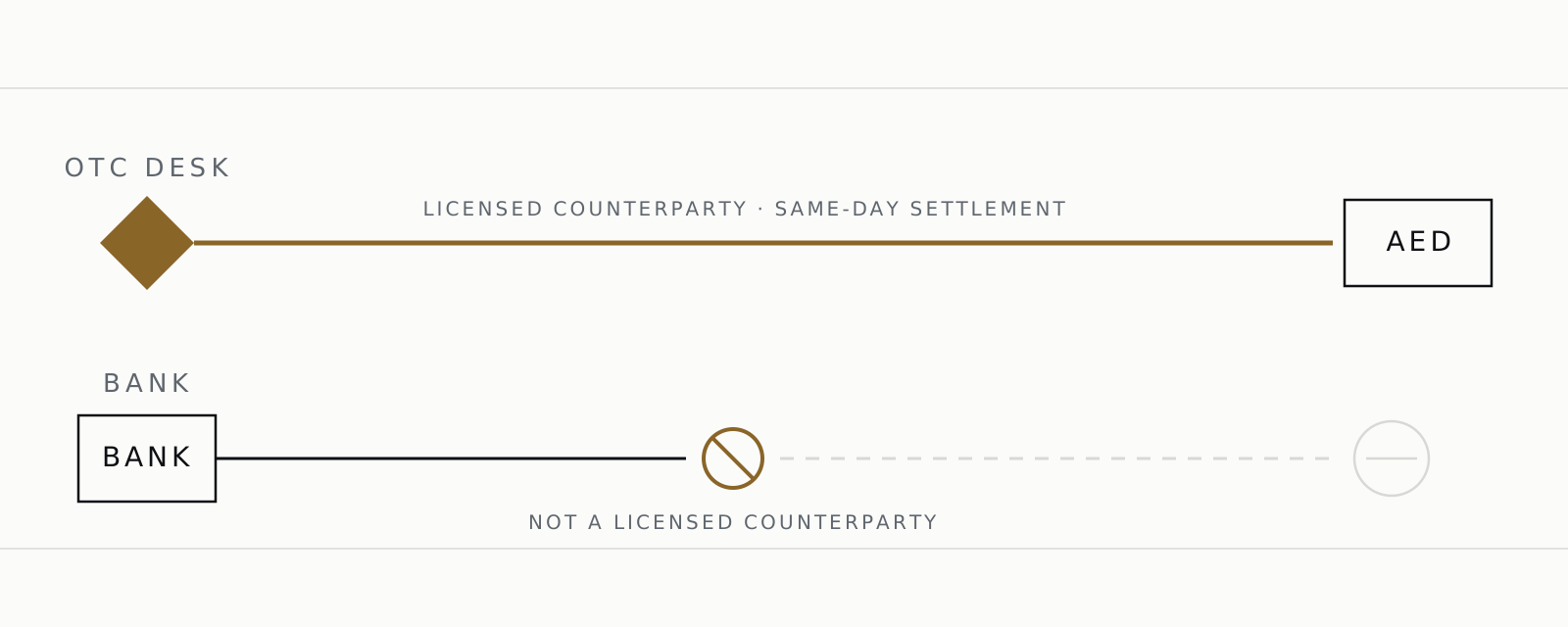
OTC desk vs bank: why your bank will not buy your crypto
A UAE bank never buys your crypto and is never the counterparty to the sale. Banks hold a CBUAE licence for banking services, not a VASP licence to trade virtual assets. A bank can only receive AED or USD after a licensed OTC desk or exchange has already bought the crypto, then check where that incoming transfer came from.
KEY FACTS
| Bank's role in a crypto sale | Settlement rail only — never the counterparty |
|---|---|
| Licence to trade virtual assets | VASP licence (VARA in Dubai, FSRA in ADGM) |
| A UAE bank's own licence | CBUAE banking licence — no VASP scope |
| IWGT spread | 0.08%–0.40%, by ticket size |
| AED settlement after a desk sale | Same business day (UAEFTS) |
| USD settlement after a desk sale | 2–5 business days (SWIFT) |
Source: VARA, ADGM FSRA and Central Bank of the UAE licensing scope; desk spread and settlement terms per the pricing table on the main page, as of September 2026.
Why will a bank not buy your crypto directly?
A licensed OTC desk, not a bank, is the counterparty when you sell crypto in the UAE. Trading virtual assets needs a separate VASP licence that no UAE bank holds: VARA in Dubai outside the DIFC, the FSRA in ADGM for Abu Dhabi, and the CMA framework federally outside those two free zones — a separate track this guide does not go into. The Central Bank of the UAE (CBUAE) licenses banks for deposits, payments and lending only, so none of them can act as your counterparty in a crypto sale.
This is not a technicality: VARA's Broker-Dealer regime places conduct and record-keeping duties on the firm behind every fill, duties a banking licence never anticipated, and stepping outside its own mandate would put a bank's CBUAE authorisation at risk.
What does a bank actually do in a crypto sale?
A bank's only role in a crypto sale is to receive the fiat proceeds once a licensed counterparty has already bought the virtual asset from you. It performs two functions, and only two: it accepts AED or USD sent by the desk or exchange that bought your crypto, and it runs its own AML and KYC checks on that incoming payment.
The second function is where most confusion starts. A bank cannot see "crypto" in a wire; it sees a transfer from a named corporate sender, and it checks that sender, the amount and your account's normal activity against its own risk rules. What UAE banks specifically check on crypto-linked inflows is covered in a separate guide — here it is enough to know that a transfer from a regulated, licensed entity clears far faster than one from a sender the bank cannot place.
Walking into a branch with a hardware wallet and asking a teller to "exchange" USDT for dirhams gets the same answer everywhere: no. Dealing in virtual assets is not a service the branch, or the bank behind it, is licensed to provide. There is no desk, no price and no settlement process behind that request.
OTC desk vs bank: who does what
The table below sets the two roles side by side. An OTC desk prices, trades and settles; a bank only ever settles, and only after the trade is already done.
| What | OTC desk (e.g. IWGT) | Bank |
|---|---|---|
| Counterparty to the crypto sale | Yes — trades from its own balance sheet | No — never buys or sells virtual assets |
| Pricing | One written all-in quote, 0.08%–0.40% by size | None — a bank has no crypto price to quote |
| Licence held | VARA Broker-Dealer, VL/24/12/002 | CBUAE banking licence, no VASP scope |
| Settlement rail | UAEFTS (AED) same day; SWIFT (USD) 2–5 days | Same rails, receiving proceeds only |
| Documents required from you | Passport or trade licence, proof of address, at onboarding | Explanation of the incoming transfer, requested after the sale |
On a crypto sale the desk carries the trade and the bank carries the wire — conflating the two is how a first-time seller ends up losing a day at the branch.
What happens when the proceeds land in your bank account?
AED proceeds from a licensed desk land the same business day the trade settles, sent by UAEFTS; USD proceeds take 2 to 5 business days by SWIFT. Either way, the wire arrives from the desk's own legal entity, in your own name, same as any other counterparty payment.
Your bank still reviews it. A transfer of size from a corporate sender is routine AML screening, not a crypto-specific hurdle: the bank confirms the sender is a real, traceable entity and that the amount fits your account's normal activity. A licensed desk's own-name settlement rule exists precisely so this review clears without drama — how to avoid a frozen account when cashing out crypto covers the details banks actually ask for.
Proceeds from an unlicensed counterparty look different: an unfamiliar sender, no confirmation to match, and reviews that stretch into days rather than hours.
How to pick the right route for your size
The practical sequence is the same for almost every seller: sell through a licensed OTC desk or exchange, let the desk settle to your own bank account, then let the bank run its own review of the incoming wire. Skipping the first step and going straight to a bank branch is the mistake this guide exists to prevent.
-
STEP 1
Confirm the counterparty holds a VASP licence
Check the licence number in the public register before sending anything. A bank cannot be this counterparty, and an unlicensed "desk" is a bigger risk than the branch you were trying to avoid.
-
STEP 2
Get a written all-in quote for your full size
IWGT's published spread runs 0.08% to 0.40% by ticket size, with no separate commission. Below the desk's typical minimum, a regulated exchange is usually cheaper; the full comparison sits in our route comparison guide.
-
STEP 3
Send the crypto and receive fiat to your own account
AED or USD goes out to an account in your own name — never a third-party account, whatever the counterparty offers.
-
STEP 4
Expect a routine AML review on the incoming wire
Keep the trade confirmation on hand if your bank asks. This is the bank doing the one job it is licensed for, not a sign anything went wrong.
The bottom line on OTC desk vs bank
A bank is a settlement rail, not a shop counter for crypto. It cannot quote you a price, cannot be your counterparty, and will decline any request to "exchange" a virtual asset directly, because doing so sits outside its CBUAE licence. Sell through a licensed OTC desk first, and the bank's part becomes what it was always meant to be: receiving a wire and checking where it came from.
FAQ
Can I sell crypto directly to my bank in the UAE?
No. UAE banks hold a CBUAE licence for banking services, not a VASP licence to trade virtual assets, so none can buy crypto from you directly. Sell to a licensed OTC desk or exchange first, then receive the proceeds in your bank account.
Why do UAE banks refuse to exchange crypto for cash?
Trading virtual assets is a separately licensed activity under VARA in Dubai, the FSRA in ADGM, or the CMA framework federally. A bank's CBUAE licence does not cover it, so a branch has no price, no process and no legal basis to accept crypto for cash.
Will my bank ask questions after I sell crypto through a licensed desk?
Yes, but routinely. The bank runs standard AML and KYC screening on the incoming wire from the desk's legal entity, the same review it applies to any sizeable corporate payment, not a crypto-specific interrogation.
Can Emirates NBD, ADCB or Mashreq buy my crypto directly?
No. None of the UAE's banks hold a VASP licence, so none can act as the counterparty to a crypto sale. Their role starts only once a licensed desk or exchange has already bought the crypto and is settling the proceeds.
What happens if I deposit crypto proceeds without using a licensed desk?
A wire from an unlicensed or unclear counterparty is far more likely to trigger an extended review or a freeze, because the bank has no regulated trade behind the payment to check it against.
Sell through the desk, let the bank do the rest
IWGT is a VARA-licensed Broker-Dealer in Dubai. All-in spread 0.08%–0.40% by size, a written quote before you send anything, AED by UAEFTS the same business day once your account is approved.
SOURCES
- VARA public register — licence status check, accessed 17 September 2026.
- Central Bank of the UAE — payment systems (UAEFTS) and bank licensing scope, accessed 17 September 2026.
- ADGM FSRA — Guidance: Regulation of Virtual Asset Activities in ADGM (10 June 2025) — official ADGM rulebook, accessed 21 September 2026.
- IWGT published pricing bands and onboarding requirements — this site, September 2026.
This guide is informational and is not legal, tax or investment advice, nor an invitation to buy or sell any virtual asset. Rules and figures are as of September 2026 — re-check the sources before acting. Virtual assets may lose their value in full or in part and are subject to extreme volatility.