
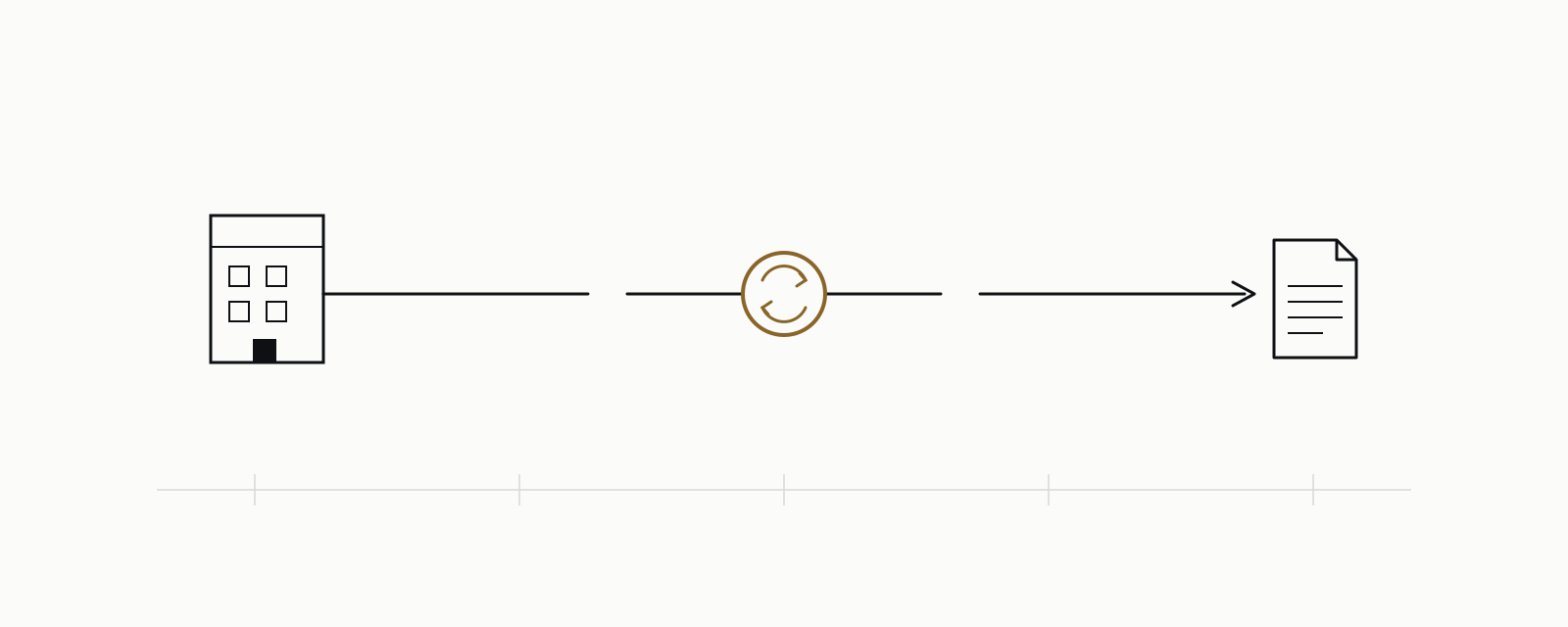
Selling USDT to pay suppliers from a UAE company account
A UAE company can sell USDT through a licensed OTC desk, but the desk pays the proceeds only into the company's own bank account — never straight to a supplier. This is the own-name settlement rule. AED lands the same business day by UAEFTS; USD for an overseas supplier takes two to five business days by SWIFT.
KEY FACTS
| Regulator | VARA (Dubai, outside the DIFC) — licence VL/24/12/002 |
|---|---|
| Settlement rule | Own-name only: proceeds go to the company's account, never a third party |
| IWGT spread | 0.08%–0.40%, by ticket size (100k/500k/2M/10M tiers) |
| AED settlement | Same business day (UAEFTS) |
| USD settlement | 2–5 business days (SWIFT) |
| Minimum ticket | From around 100,000 USDT |
| Dealing hours | 24/7 |
Source: IWGT published pricing bands and dealing hours, as of September 2026.
Why can't the desk pay our supplier directly?
A VARA-licensed OTC desk settles a USDT sale only to an account held in the client's own legal name — the own-name settlement rule. IWGT pays the company that opened the trading account, the entity named on its trade licence, not the supplier named on an invoice. Your company then pays the supplier itself, from its own bank account.
This structure stops an OTC desk becoming an unlicensed payment conduit between two unrelated businesses, a pattern regulators watch for in trade-based money laundering. It also protects your business: a forged or altered invoice cannot redirect a settlement, because the desk never pays anyone but the account holder. See our guide to selling crypto from a company account in the UAE for how the corporate account itself gets approved.
What documents does our company need?
A UAE company selling USDT needs three sets of documents before a desk will trade: the trade licence, proof of beneficial ownership, and evidence of where the USDT came from. Mainland and free zone companies both qualify; the desk checks that the licence activity covers the transaction, not the jurisdiction.
- Trade licence. Current, showing the company name, licence number and activity.
- Ownership and UBO documents. Memorandum of association or the free zone equivalent, plus passport copies of shareholders and signatories above the disclosure threshold.
- Source-of-funds evidence for the USDT. Where it came from — a paying client, a treasury balance, an earlier sale — per our source-of-funds documentation guide.
- The supplier's invoice or contract. Not required by the desk to release funds, but the payment reference your own bank will want when you pay the supplier.
Approval for a company account typically takes one business day once the file is complete, and it is worth doing before the supplier's invoice is due rather than on the day itself.
How does the trade work, step by step?
Paying a supplier with USDT proceeds runs in four steps once your company account is open. The two steps you control directly — sending the USDT and receiving the money — both happen the same trading day.
-
STEP 1
Register the company account before you need it
Submit the trade licence, ownership documents and source-of-funds evidence listed in our onboarding section. Approval takes about one business day, so open the account before the supplier's due date, not on it.
-
STEP 2
Request a quote for the amount and currency you need
State the USDT amount and whether you need AED for a local supplier or USD for an overseas one. The desk returns one all-in price, held for a defined window, at the published spread by ticket size.
-
STEP 3
Send USDT on the agreed network
TRC20 is the common rail for USDT in the UAE. Send only after accepting the written quote, to the address it names — not to any address received over a messaging app.
-
STEP 4
Receive AED or USD, then pay the supplier from your own bank
AED goes out by UAEFTS the same business day; USD goes by SWIFT and takes 2–5 business days. Once the credit lands in the company account, your finance team pays the supplier as a normal bank transfer.
AED or USD: which route fits your supplier?
The right settlement currency for paying a supplier from USDT proceeds depends on where the supplier banks, not on where your company is registered. A UAE-based supplier is paid fastest and cheapest in AED; an overseas supplier usually needs USD, which adds the SWIFT timeline and possible correspondent fees.
| Route | Time to your account | Cost add-on | Best for |
|---|---|---|---|
| AED via UAEFTS | Same business day | Desk spread only | UAE-based suppliers, local invoices |
| USD via SWIFT | 2–5 business days | Desk spread, plus possible correspondent fees | Overseas suppliers invoicing in USD |
For a UAE supplier, AED settlement removes the SWIFT wait entirely; for an overseas supplier, build the 2–5 day window into your payment terms.
Worked example: paying a supplier from a 500,000 USDT sale
A UAE trading company holds 500,000 USDT from a client payment and needs AED to pay a Dubai-based supplier's invoice. At the 3.6725 peg, 500,000 USDT is worth AED 1,836,250 before any spread.
At the 500,000 tier, IWGT's published spread is 0.25%, which costs AED 4,591. The company receives AED 1,831,659 in its own account, by UAEFTS, the same business day. If the supplier's invoice is AED 1,800,000, the company pays it from that credit and keeps roughly AED 31,659 for other payables.
If the same supplier invoices in USD instead, the trade converts to a USD balance rather than an AED one, and the credit reaches the company's account in two to five business days by SWIFT rather than the same day.
What records should we keep for the accountant and FTA?
A UAE company selling USDT to fund a supplier payment should keep the trade confirmation, the supplier's invoice, and a record of where the USDT came from — the same three documents a bank or an accountant asks for later. These sit alongside your normal VAT and Corporate Tax records, not instead of them.
- Trade confirmation from the desk. Price, amount, network and timestamp.
- Supplier invoice or contract. The commercial reason for the payment, matched to the bank debit.
- Source-of-funds note. How the company acquired the USDT before selling it.
- Bank statement. Showing the AED or USD credit and the onward payment to the supplier.
Federal Corporate Tax applies to a UAE company's taxable profit above AED 375,000 a year at 9%, for financial years starting on or after 1 June 2023; profit at or below that threshold is taxed at 0%. Whether a specific USDT conversion counts as taxable income, a capital movement or neither depends on your company's accounting treatment, and it is not something a trading desk can advise on — ask your accountant. Our crypto tax in the UAE guide sets out the public rules; a licensed tax adviser applies them to your accounts.
The bottom line on selling USDT to pay suppliers
Selling USDT to pay a supplier works cleanly when you treat it as two separate payments: the desk settles to your company's own account under the own-name settlement rule, and your company pays the supplier from there. Keep the trade confirmation and the invoice together, and the accounting trail closes itself.
FAQ
Can the desk pay our supplier directly instead of our company account?
No. Own-name settlement means a VARA-licensed desk pays only the account holder that opened the trade, in this case your company. You pay the supplier yourself, from your own bank account, once the funds land.
What documents does a UAE company need to sell USDT?
The trade licence, ownership and UBO documents, and evidence of where the USDT came from. The supplier's invoice is not required by the desk but is useful for your own payment reference and your accountant's records.
How fast can we pay a UAE-based supplier after selling USDT?
AED settles to the company's account the same business day by UAEFTS once the trade is agreed before the bank cut-off on a banking day. You can then wire the supplier from your own bank the same day.
How long does it take to pay an overseas supplier in USD?
USD moves by SWIFT and typically takes two to five business days to reach the company's account, before you pay the supplier onward. Correspondent banks on the route can add fees or a further delay.
Do we owe tax on converting USDT to pay a supplier?
Federal Corporate Tax applies to your company's overall taxable profit above AED 375,000 a year at 9%, not to a single conversion in isolation. Whether this trade affects your taxable profit depends on your accounting treatment; ask your accountant.
Settle a supplier payment to your own company account
IWGT is a VARA-licensed Broker-Dealer in Dubai. Every trade settles to the client's own-name account only; AED goes out by UAEFTS the same business day, USD by SWIFT in 2–5 business days, at a published spread from 0.08%.
SOURCES
- VARA Compliance and Risk Management Rulebook — Part IV, Client Money Rules (own-name settlement basis), accessed 16 September 2026.
- Central Bank of the UAE — payment systems (UAEFTS), accessed 16 September 2026.
- UAE Ministry of Finance — Corporate Tax (9% rate, AED 375,000 threshold), accessed 16 September 2026.
- SWIFT gpi — end-to-end payment tracking, accessed 16 September 2026.
- IWGT published pricing bands and onboarding requirements — IWGT published pricing bands, September 2026.
This guide is informational and is not legal, tax or investment advice, nor an invitation to buy or sell any virtual asset. It does not address your company's individual tax or accounting position — consult your accountant or a licensed tax adviser. Rules and figures are as of September 2026 — re-check the sources before acting. Virtual assets may lose their value in full or in part and are subject to extreme volatility.