
How the USDT/AED rate behaves: the peg, real spreads and stress days
The USDT/AED rate sits within a few hundredths of AED 3.6725 on almost every trading day, because the dirham has been pegged to the US dollar since 1997 and USDT tracks the dollar at 1:1. What actually varies is the provider's spread and, on rare stress days, USDT's own price against the dollar.
KEY FACTS
| AED/USD peg | 3.6725, since 1997 |
|---|---|
| USDT design target | 1:1 to the US dollar |
| IWGT spread | 0.08%–0.40%, by ticket size |
| AED settlement | Same business day (UAEFTS) |
| Past USDT stress episodes | October 2018, May 2022, March 2023 — each ended with USDT back at par |
Source: Central Bank of the UAE (dirham peg); Tether transparency page; desk spread per the pricing table on the main page, as of September 2026.
Why does the USDT/AED rate almost never move?
The USDT/AED rate barely moves because two separate pegs stack on top of each other. The dirham has tracked the US dollar at 3.6725 — a currency peg defended by the Central Bank since 1997 — and USDT is designed to track the dollar at 1:1. Multiply two near-constants and the USDT/AED rate behaves like arithmetic, not like a floating currency pair.
That arithmetic explains why the number rarely changes: 1 USDT × 3.6725 ≈ AED 3.6725, before any provider's margin. It also explains why the dirham side almost never contributes to a bad rate — pressure, when it appears, comes from the USDT side or the provider's spread, not the Central Bank's exchange policy.
What spread do you actually pay on a USDT/AED trade?
The spread, not the peg, is what changes your payout on a normal day. A provider's spread is the gap between the 3.6725 reference rate and the rate you are actually quoted, and it typically shrinks as ticket size grows because a desk's fixed cost of hedging is spread over more volume.
| Ticket size (USDT) | Spread | Indicative cost (AED) |
|---|---|---|
| 100,000 | 0.40% | AED 1,469 |
| 500,000 | 0.25% | AED 4,591 |
| 2,000,000 | 0.15% | AED 11,018 |
| 10,000,000 | 0.08% | AED 29,380 |
At the 2,000,000 USDT tier the spread is roughly half of the 100,000 USDT tier, in percentage terms — the desk's fixed cost stays the same regardless of size.
For a full breakdown at a specific size, see the cost of selling 1,000,000 USDT.
How does the rate behave on a normal day compared with a stress day?
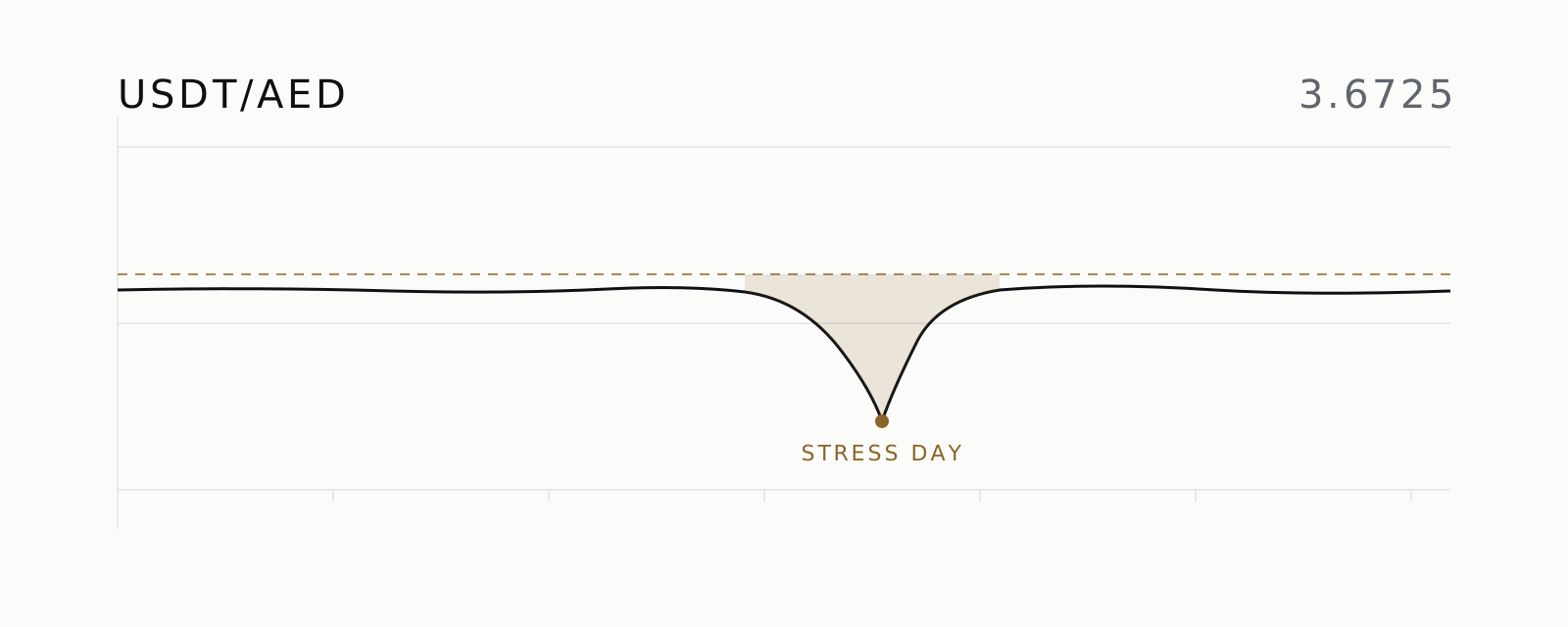
On a normal day the USDT/AED rate is the 3.6725 peg minus the spread — USDT trades within a fraction of a cent of one dollar, and the spread is the only variable you negotiate. On a stress day a second variable appears: USDT's own dollar price can move away from $1.00, changing the AED value of every USDT you hold before any spread applies.
| Condition | USDT/USD | AED before spread | What moves |
|---|---|---|---|
| Normal day | ~$1.00 ± $0.001 | ~AED 3.6725 | Spread only |
| Illustrative stress day | $0.95 | ~AED 3.49 | USDT's price, often spread too |
The dirham side never moves; on a stress day the gap opens entirely on the USDT side, before any spread is added.
The stress scenario is modelled on three real episodes since 2018, covered in full in our guide to USDT depeg risk. Recovery, more than the dip, is worth remembering: Tether kept redeeming at par through each episode, and that redemption door pulls the price back.
What happened to the rate during real stress episodes?
USDT has moved away from its dollar peg in three notable episodes since 2018, each with a different trigger: doubts about reserves in October 2018, the TerraUSD collapse in May 2022, when USDT dipped below par on several venues while Tether processed heavy redemptions, and the March 2023 banking scare that hit USDC instead — USDT briefly traded above $1 while USDC fell well below par. Trough prices differed by venue and by data source, so this guide does not quote a single figure for any episode.
None of those episodes moved the dirham side; the peg did not flex once. What moved was the USDT leg, and for a UAE-based seller that is the only leg that matters — your AED payout tracks USDT's dollar price that day, not a separate "crypto rate for Dubai".
Worked example: selling 500,000 USDT on a stress day
Take a seller with 500,000 USDT who normally expects close to AED 1,836,250 before the spread — 500,000 × 3.6725. On a mild stress day, if USDT trades at $0.99 instead of par, the same 500,000 USDT is worth about AED 1,817,888 — a difference of roughly AED 18,363 that sits in the asset, not in any fee.
Add a realistic spread and the two effects stack: a 0.25% spread on AED 1,817,888 costs a further AED 4,545, for a total gap of roughly AED 22,900 against the no-stress figure. A desk cannot quote that gap away — it sits in the asset, not the fee — but it can settle against a single written all-in quote.
What does a licensed desk do differently on a stress day?
A licensed desk widens its checks before it widens its price. During a confirmed depeg event we re-price against the live USDT/USD feed rather than assuming par, and settle by the usual bank rails to an account in your own name — our VARA licence VL/24/12/002 requires own-name settlement regardless of market conditions.
Published bands still apply — the same 0.08–0.40% spread by size — but against USDT's live price, not an assumed $1.00. A desk quoting full par during a visible depeg is either absorbing a loss it will recover elsewhere, or has not updated its feed.
Does USDT vs USDC change the stress-day picture?
Choosing USDT over USDC does not remove stress-day risk — it changes which issuer's reserves you are trusting. USDC fell further in March 2023 because part of its reserves sat inside a bank that failed; USDT's worst episode, in 2018, was driven by doubts about reserve composition instead. Diversifying which stablecoin you hold ahead of a large sale is a legitimate way to manage the risk.
A dirham-denominated stablecoin would remove the USD leg entirely, but it does not yet match USDT's liquidity in the UAE OTC market — so size sellers still manage that risk through timing and counterparty choice instead.
FAQ
Why does the USDT/AED rate almost never move?
Two pegs stack together: the dirham has tracked the dollar at 3.6725 since 1997, and USDT targets the dollar at 1:1. Multiply two near-constants and there is almost nothing left to move on an ordinary day.
What is a realistic spread when selling USDT for AED in the UAE?
At a licensed desk, expect roughly 0.08% to 0.40% off the 3.6725 reference rate, narrowing as ticket size grows. Unlicensed cash desks and casual P2P deals often run wider, even at a quote close to the peg.
Has USDT ever depegged from the dollar, and by how much?
Yes. USDT traded below par in October 2018 and again in May 2022 after the TerraUSD collapse; in March 2023 the stress hit USDC instead, and USDT briefly traded above $1. Trough prices differed by venue, and each episode ended within weeks with USDT back at par.
What happens to my AED payout if USDT depegs on the day I sell?
Your payout follows USDT's dollar price that day, multiplied by the fixed 3.6725. At $0.99 instead of par, 500,000 USDT is worth about AED 18,363 less before any spread — the dirham peg itself does not move.
Should I wait for a stress day to pass before selling USDT?
That depends on your liquidity needs and risk tolerance — a desk cannot advise on timing the market. It can quote one written all-in price against the live rate, so you know the true cost before deciding.
Get a quote priced against the live rate, stress or not
IWGT prices every trade against the live USDT/USD price and the fixed 3.6725 peg, with a published spread of 0.08–0.40% by size. Request a quote and see the breakdown before you send anything.
SOURCES
- Central Bank of the UAE — payment systems (UAEFTS), accessed 18 September 2026.
- VARA public register, accessed 18 September 2026.
- Tether — Transparency page, accessed 18 September 2026.
- IWGT published pricing bands, September 2026.
This guide is informational and is not legal, tax or investment advice, nor an invitation to buy or sell any virtual asset. Rules and figures are as of September 2026 — re-check the sources before acting. Virtual assets may lose their value in full or in part and are subject to extreme volatility.