
Paying medical bills in the UAE from crypto: converting to AED the compliant way
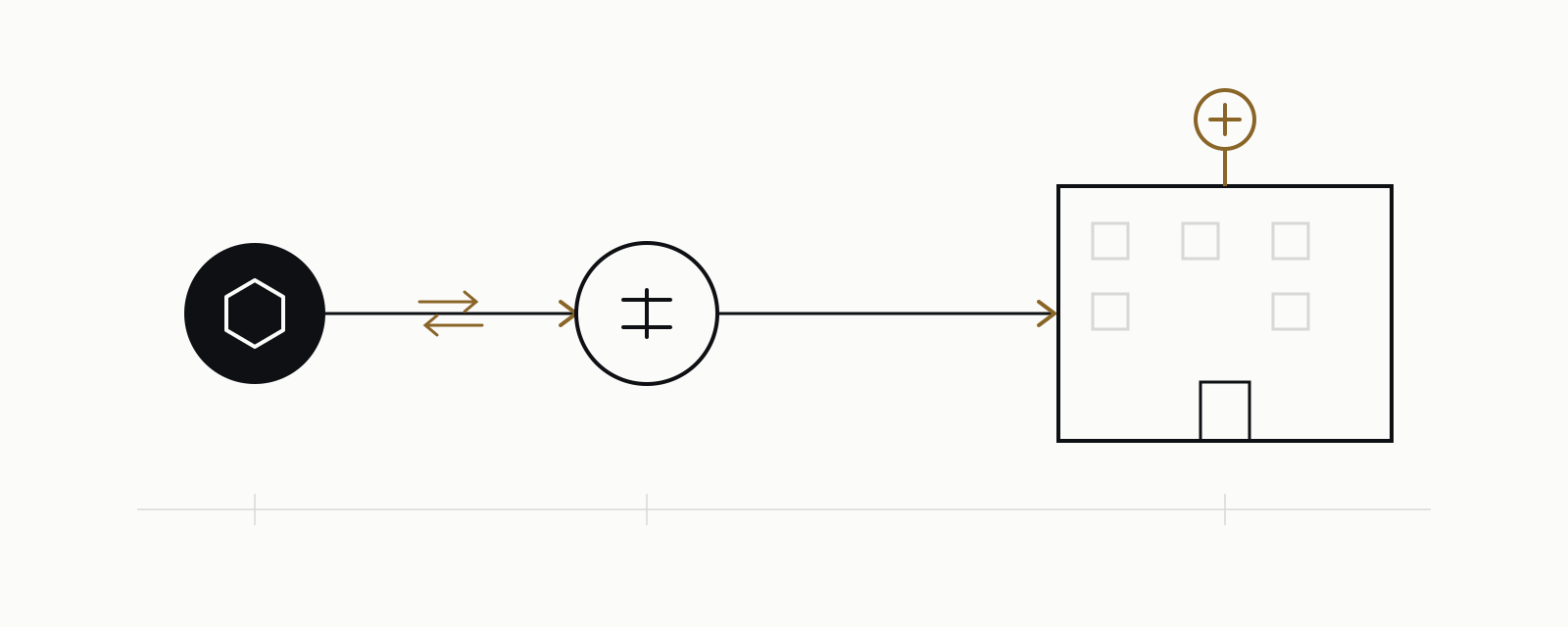
Private hospitals and clinics in the UAE do not take USDT or Bitcoin as payment. The compliant route is converting crypto to AED through a regulated exchange, or a VARA-licensed OTC desk for larger bills, then paying the clinic by bank transfer or card from your own account.
KEY FACTS
| Direct crypto acceptance by UAE clinics | Effectively none — convert to AED or USD first |
|---|---|
| OTC desk minimum ticket | ~100,000 USDT; smaller bills usually cheaper on an exchange |
| OTC spread by ticket size | 0.40% at 100k, 0.25% at 500k, 0.15% at 2M, 0.08% at 10M USDT |
| AED settlement | Same business day via UAEFTS |
| USD settlement | 2–5 business days by SWIFT |
| Payout rule | Own-name account only — never paid to the clinic directly |
| Regulator | VARA (Dubai, outside DIFC) — licence VL/24/12/002 |
| AED/USD peg | 3.6725 |
Source: IWGT dealing desk; Central Bank of the UAE; VARA Rulebook, as of September 2026.
Why can't I pay a UAE hospital directly in crypto?
Private hospitals and clinics in the UAE do not accept USDT, Bitcoin or other virtual assets as direct payment for treatment, as of September 2026. Their billing systems invoice in dirhams, and the facilities themselves are licensed by the Dubai Health Authority (DHA) or, in Abu Dhabi, the Department of Health (DOH) — neither regulator addresses virtual-asset payments.
VARA licenses virtual asset service providers such as exchanges and OTC desks, not hospitals or clinics, so a facility taking crypto directly would carry a compliance burden with no framework behind it. The practical route is to cash out crypto legally in the UAE first, then pay the bill in dirhams like any other patient.
This is not a workaround, it is the only route: clinics do not run crypto wallets for patient billing, and there is no established UAE practice for a clinic to invoice in crypto. Treat any offer to accept crypto directly from someone attached to a clinic or hospital as a payment scam, not a service.
Which route fits your bill size: exchange or OTC desk?
The realistic route to pay a UAE medical bill from crypto depends on the size of the bill, not on preference. Below roughly 100,000 USDT, a regulated exchange with a bank or card withdrawal is normally faster and cheaper than an OTC desk, because that figure is the desk's minimum ticket.
IWGT's spread runs from 0.40% at a 100,000 USDT ticket down to 0.08% at 10,000,000 USDT (see the pricing tiers), and it only clears its cost advantage over an exchange once a bill is genuinely large — a same-day surgery deposit, or an invoice from an overseas hospital paid through a UAE-based medical agent, for example. Check the current USDT to AED rate before comparing quotes, since both routes price off the same 3.6725 peg.
| Bill size | Realistic route | Time to funds |
|---|---|---|
| Under ~AED 367,000 (~100,000 USDT) | Regulated exchange, own-name withdrawal | Typically same day to T+1 |
| Large single bill, ≥100,000 USDT equivalent (urgent surgery, overseas treatment via a UAE agent) | VARA-licensed OTC desk | AED same day via UAEFTS; USD 2–5 business days by SWIFT |
| Staged treatment paid in several draws | Exchange for each smaller draw; OTC desk once a draw reaches ~100,000 USDT | Varies by draw size |
The 100,000 USDT line is not arbitrary — it is the desk's minimum ticket, and below it the exchange route is usually the cheaper one.
Why does the AED have to land in your account, not the clinic's?
Own-name settlement means a licensed exchange or OTC desk pays proceeds only into an account held in the client's own name, never directly to a third party such as a hospital or clinic. This is a compliance rule, not a convenience choice, and it holds even when the whole purpose of the money is to pay someone else.
The clinic still gets paid — one step removed. You convert crypto to AED first, receive it in your own bank account, and then pay the clinic afterward by card or transfer, exactly as you would with salary or savings. Check the VARA licence of any exchange or desk before sending crypto, since only a licensed provider is bound by this own-name rule.
For a medical bill this separation matters more than usual. An agent or "billing coordinator" who asks you to send crypto directly to them, rather than into your own account first, is asking you to break the one rule designed to protect you. Convert to AED yourself, then pay the clinic or agent from your own bank.
How do you convert crypto into AED to pay a medical bill?
Converting crypto to AED for a medical bill follows the same five steps whether you use an exchange or an OTC desk, with the account-opening step ideally done before any emergency arises.
-
STEP 1
Open the account before you need it
Verify your identity and register your own bank account in advance — see the onboarding requirements — so an urgent bill does not wait on paperwork.
-
STEP 2
Get a written quote for the exact amount
Request a quote naming the network, the deposit address, the spread and the expiry, sized to what the clinic actually needs in AED or USD.
-
STEP 3
Send the crypto to the confirmed address
Send only to the address and network on the written quote, and only after you accept it, so the price is locked before the coins move.
-
STEP 4
Receive AED or USD in your own account
AED typically lands the same business day through UAEFTS; a USD payout by SWIFT takes 2 to 5 business days, which matters for an invoice from a hospital abroad.
-
STEP 5
Pay the clinic from your bank
Pay the clinic or agent by card or bank transfer from your own account, and keep the trade confirmation in case your bank asks about the source of funds.
How fast can AED reach your account for an urgent medical case?
AED settlement through UAEFTS, the Central Bank of the UAE's real-time payment system, can reach a client's own account the same business day once a trade is confirmed before the bank's afternoon cut-off. This is exactly the scenario same-day settlement is built for: an urgent operation, a hospital deposit due before a bed is confirmed, or a same-day discharge bill.
A USD payout routed by SWIFT takes 2 to 5 business days instead, because each correspondent bank on the route runs its own check — this matters when the hospital or clinic is overseas and invoices only in dollars. See our guide to bank transfer timing after a crypto sale for how the two rails compare.
Neither rail moves on a UAE public holiday or over the Friday–Saturday weekend at most banks, so a bill due on a non-business day still needs the trade placed the working day before.
What should you check before selling crypto to pay a clinic?
A few checks remove nearly every avoidable problem in converting crypto to pay a medical bill, and all of them happen before the coins move.
- No "hospital wallet". No licensed UAE clinic operates a crypto wallet for patient billing — treat any request to send coins straight to one as fraud.
- No third-party payout. A licensed provider refuses to pay anyone but you, so budget the extra step of paying the clinic yourself afterward.
- Do not force a small bill through an OTC desk. Under the 100,000 USDT minimum ticket, a regulated exchange is usually the cheaper route.
- Trade before the cut-off. On the day of an urgent procedure, place the trade early rather than after the bank's afternoon deadline.
- Keep the trade confirmation. A first large crypto-related credit can trigger a bank source-of-funds check; the confirmation and invoice usually answer it quickly.
FAQ
Can I pay a private hospital in the UAE directly in USDT or Bitcoin?
No. UAE clinics and hospitals bill in dirhams and do not hold crypto wallets for patient payments. Convert to AED first through a regulated exchange or a VARA-licensed OTC desk, then pay the clinic from your own bank account.
What is own-name settlement, and why does it matter for a medical bill?
Own-name settlement means a licensed provider pays proceeds only into an account in your own name, never directly to a clinic or agent. You receive the AED first, then pay the bill yourself — the same rule stops anyone asking you to send crypto straight to a third party.
Should I use a regulated exchange or an OTC desk for a medical bill?
Below roughly 100,000 USDT, a regulated exchange is usually faster and cheaper, since that is the OTC desk's minimum ticket. Above it — a large single bill or overseas treatment paid through a UAE agent — an OTC desk's tighter spread and same-day AED settlement generally work out ahead.
How fast can I get AED into my account for an urgent procedure?
AED can land the same business day through UAEFTS once a trade is confirmed before the bank's cut-off. A USD payout by SWIFT, needed when the hospital itself bills in dollars overseas, takes 2 to 5 business days instead.
Does IWGT pay the clinic or hospital directly on my behalf?
No. IWGT settles only to an account in your own name, in line with VARA's client-money and own-name settlement rules. You pay the clinic yourself afterward, by card or bank transfer from your own account.
What should I avoid when converting crypto to pay a medical bill?
Avoid sending crypto directly to anyone claiming to bill on a clinic's behalf, and avoid forcing a small bill through an OTC desk below its minimum ticket. Keep your trade confirmation in case your bank asks about a large incoming credit.
Convert crypto to AED for a medical payment, the compliant way
IWGT is a VARA-licensed OTC desk in Dubai for tickets from 100,000 USDT upward. Get a written quote, settle AED the same business day through UAEFTS, and pay your clinic from your own account.
SOURCES
- VARA Compliance and Risk Management Rulebook — Part IV, Client Money Rules, accessed 16 September 2026.
- Central Bank of the UAE — payment systems (UAEFTS), accessed 16 September 2026.
- Dubai Health Authority — licensing of Dubai private healthcare facilities, accessed 16 September 2026.
- Department of Health – Abu Dhabi — licensing of Abu Dhabi private healthcare facilities, accessed 16 September 2026.
This guide is informational and is not legal, tax, medical or investment advice, nor an invitation to buy or sell any virtual asset. Rules and figures are as of September 2026 — re-check the sources before acting. Virtual assets may lose their value in full or in part and are subject to extreme volatility.