
Nostro and vostro: why a USD wire takes days
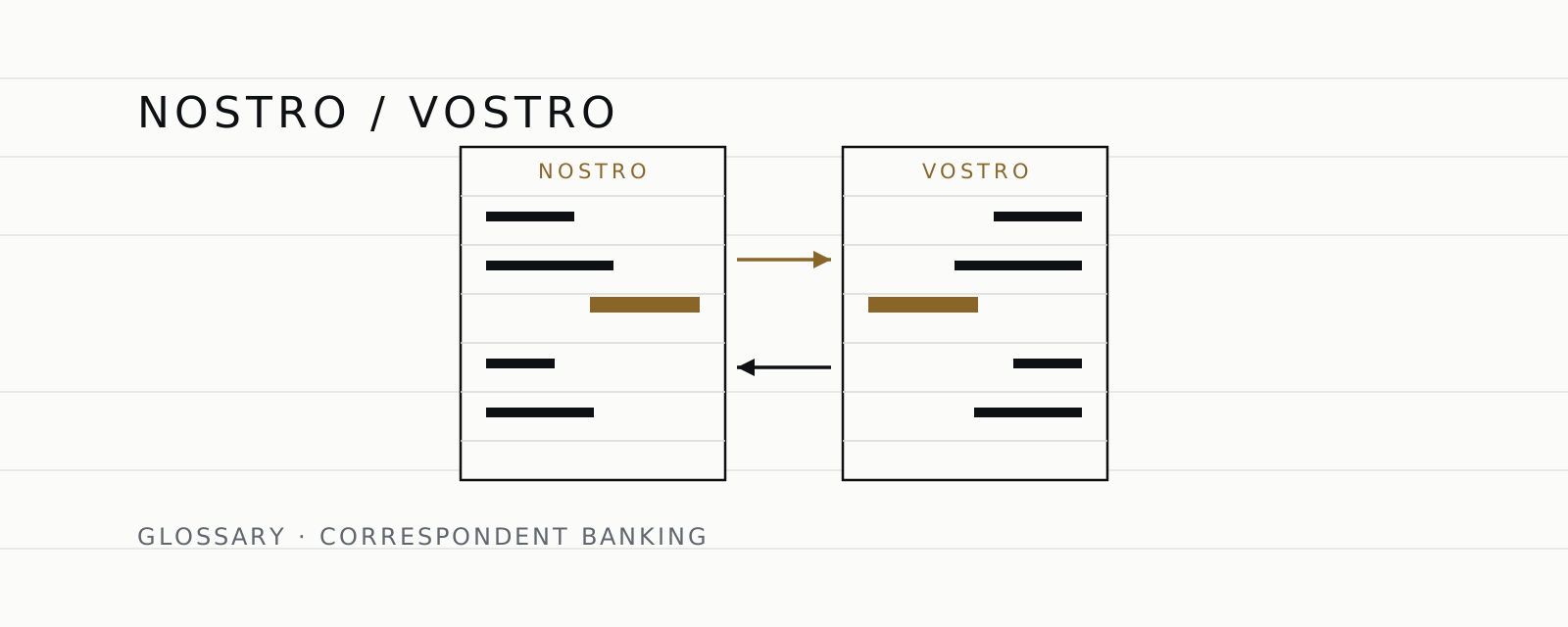
A nostro account is an account a bank holds with a foreign bank in that bank's currency — "ours" from the holder's side. The same ledger is the vostro — "yours" — for the bank that holds it. These paired accounts are what actually move a SWIFT payment.
KEY FACTS
| What it is | Two names for one correspondent account between banks |
|---|---|
| Nostro | "Ours": the account your bank holds with a foreign bank |
| Vostro | "Yours": the same account on the other bank's books |
| USD from the UAE | Settles on a US correspondent's ledger; 2 to 5 business days |
| AED inside the UAE | UAEFTS, same business day |
| IWGT USD payout | 2 to 5 business days, own-name accounts only |
Source: BIS Committee on Payments and Market Infrastructures (correspondent banking mechanics) and IWGT settlement terms, as of September 2026.
One account, two names
Nostro ("ours") is the account Bank A holds with Bank B, in Bank B's currency, on Bank A's books; vostro ("yours") is the same account as Bank B records it, every entry mirrored on both ledgers. SWIFT carries the instruction; the nostro-vostro pair is where value changes hands.
Why USD wires from the UAE take 2 to 5 days
Dollar settlement happens in the United States, so a UAE bank keeps a pre-funded USD nostro with a New York correspondent: the sender's bank sends an MT103, the credit posts to that nostro, and only then does the UAE bank credit the client. The message travels in seconds; the ledger entries across one to three correspondent pairs take days, because each correspondent works its own business days and cut-off and any compliance query pauses the entry. Dirhams skip this layer over the same-day UAEFTS rail. Fees on the chain are mapped in SWIFT transfers sent from the UAE.
Why it matters when selling USDT in the UAE
When you sell USDT through a licensed desk and elect dollars, the on-chain leg is as fast as for dirhams; the correspondent leg is what takes 2 to 5 business days, as of September 2026 (see selling USDT for US dollars). Choose AED and the payout lands the same business day.
Illustrative example
You sell 400,000 USDT at a 0.15% spread (published bands 0.08% to 0.40%, as of September 2026): the desk's bank wires USD 399,400. It leaves Dubai on Tuesday after the New York cut-off; Wednesday the first correspondent posts it on; Thursday your bank's nostro is credited and your account with it. Paid in AED, the dirhams would have arrived on Tuesday.
FAQ
Is a nostro account the same as a vostro account?
Yes — they are two names for one account. The bank that keeps money abroad calls it nostro ("ours"); the bank holding the money calls the same account vostro ("yours"). Every transaction posts to both ledgers as a mirror entry.
What is a loro account?
Loro is Latin for "theirs". When Bank A talks to Bank C about the account Bank A holds with Bank B, it calls that account a loro. You rarely meet the term outside correspondent-banking departments.
Can an individual or a company open a nostro account?
No. Nostro accounts exist only between regulated financial institutions. Clients meet them indirectly — through correspondent deductions and the 2–5 business day timeline on foreign-currency wires.
Do nostro accounts have anything to do with crypto?
Only at the settlement step. A USDT sale settles on-chain in minutes, but the fiat payout still travels across correspondent ledgers. Dollars mean a nostro chain and 2–5 business days; dirhams mean UAEFTS the same business day.
Sell USDT with a settlement date you can plan around
IWGT is a VARA-licensed Broker-Dealer in Dubai (licence VL/24/12/002). USD settles by SWIFT in 2–5 business days to own-name accounts; AED settles by UAEFTS the same business day. Spread 0.08–0.40% by ticket size, published openly.
SOURCES
- BIS Committee on Payments and Market Infrastructures — correspondent banking, accessed 11 September 2026.
- SWIFT — about the cooperative, accessed 11 September 2026.
- Central Bank of the UAE — payment systems (UAEFTS), accessed 11 September 2026.
- IWGT published pricing bands and settlement terms, September 2026.
This guide is informational and is not legal, tax or investment advice, nor an invitation to buy or sell any virtual asset. Rules and figures are as of September 2026 — re-check the sources before acting. Virtual assets may lose their value in full or in part and are subject to extreme volatility.