
What is a stablecoin?
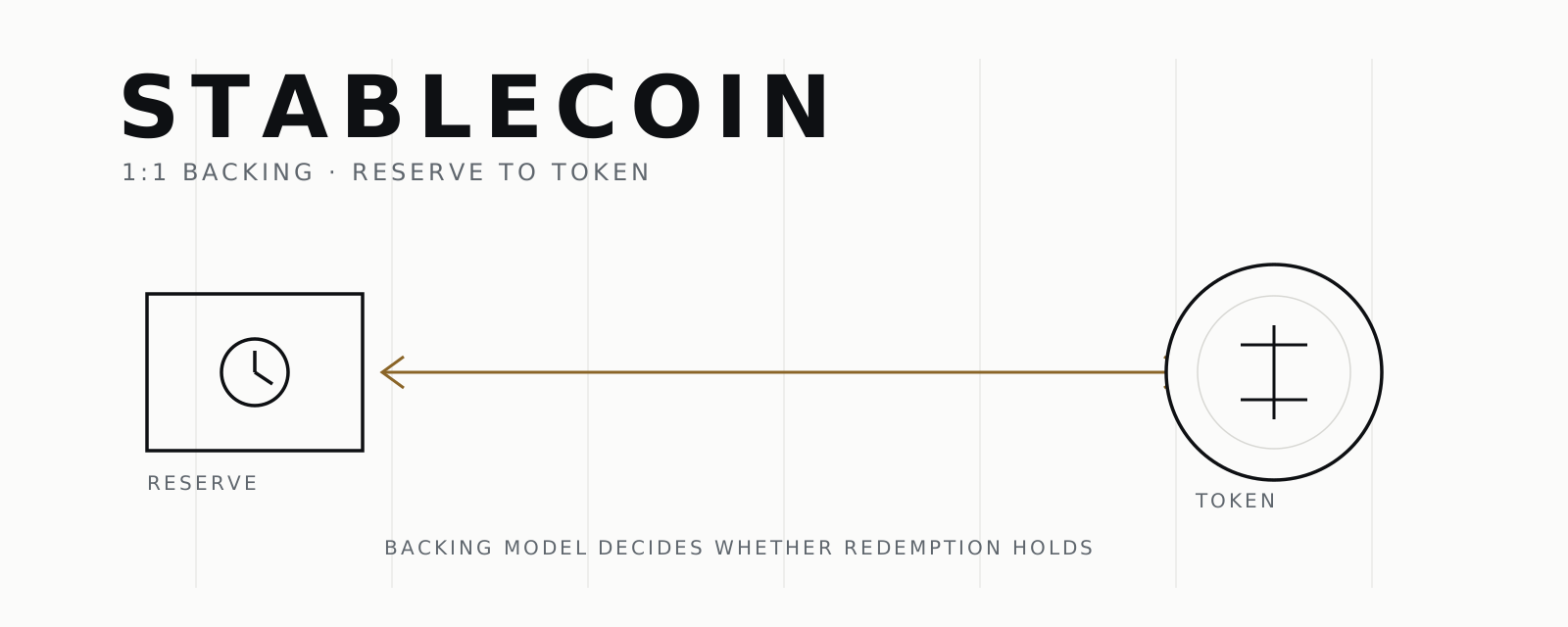
A stablecoin is a crypto asset engineered to hold a stable price, almost always pegged 1:1 to a fiat currency such as the US dollar. The three backing models are fiat-collateralised (USDT, USDC), crypto-collateralised (overcollateralised, DAI-style) and algorithmic — largely discredited since TerraUSD collapsed in May 2022. Backing quality decides whether redemption holds.
KEY FACTS
| Definition | A crypto asset designed to trade at a stable price, usually 1:1 to a fiat currency |
|---|---|
| Fiat-collateralised examples | USDT (Tether), USDC (Circle) |
| Crypto-collateralised example | DAI, overcollateralised with crypto assets locked in a smart contract |
| Algorithmic status | Largely discredited after TerraUSD (UST) collapsed to near zero, May 2022 |
| What "backing" means | Reserve composition, redemption mechanics and attestations — not just a peg claim |
| IWGT settlement reference | AED peg of 3.6725, not the stablecoin issuer's own peg claim |
Source: Tether Transparency, Circle, Central Bank of the UAE, as of September 2026.
What are the main backing models?
A stablecoin holds its price by combining a reserve or an algorithm with a redemption promise from the issuer; "stable" describes the target, not a guarantee. Fiat-collateralised stablecoins such as USDT and USDC, compared in USDT vs USDC in the UAE, hold cash, cash equivalents and short-term Treasuries, and the issuer redeems eligible holders 1:1 in fiat; the main risk is reserve quality and issuer solvency. Crypto-collateralised stablecoins such as DAI lock other crypto assets above 100% of issuance, with redemption at protocol level; the risk is collateral falling faster than liquidation covers. Algorithmic stablecoins hold no hard reserve and defend the peg through market incentives alone, so peg failure can be sudden and total.
What does "backing" actually mean?
Backing means the reserve assets and redemption process that let a holder convert the token back to its reference fiat currency at par. Redemption is usually offered to eligible holders with minimum-size conditions, not instantly at retail. Disclosure comes in two strengths: an attestation is a point-in-time snapshot, a full audit tests controls over a period; most major issuers publish attestations rather than audits, as of September 2026. See proof of reserves at an OTC desk.
Why it matters when selling USDT in the UAE
A stablecoin's peg is a private promise from one issuer; the AED's currency peg of 3.6725 to the dollar is a Central Bank commitment backed by state reserves, as of September 2026. A redemption problem at the issuer shows up first in the token's market price, which is why a desk prices a USDT sale against the AED's own rate rather than the issuer's peg claim, with the spread bands published openly.
FAQ
Is USDT a stablecoin?
Yes. USDT (Tether) is a fiat-collateralised stablecoin, reserved mainly in cash, cash equivalents and short-term Treasuries, and it is the token IWGT settles most large sales in, priced against the AED peg of 3.6725.
Can a fiat-collateralised stablecoin still lose its peg?
Yes, if reserve quality is weak, redemption is restricted, or confidence drops faster than the issuer can demonstrate solvency. Reserve composition and redemption terms matter more than any peg claim.
Are algorithmic stablecoins safe to hold?
The category holds no hard collateral, and TerraUSD's collapse to near zero in May 2022 showed how fast an algorithmic peg can fail. This is a factual caution, not investment advice — treat any algorithmic design as a different risk from a reserved token.
Does IWGT settle USDT against the issuer's peg or the AED peg?
IWGT settles against the AED's own peg of 3.6725 to the US dollar, not the stablecoin issuer's peg claim, because the AED side rests on a Central Bank commitment rather than a private redemption promise.
Sell USDT against a currency peg, not an issuer's promise
IWGT settles every USDT sale against the AED's own 3.6725 peg, not a stablecoin issuer's claim, at an all-in spread of 0.08–0.40% by size, published openly.
SOURCES
- Tether — Transparency — reserve attestations and reported composition, accessed 19 September 2026.
- Circle — USDC reserves and disclosures, accessed 19 September 2026.
- Central Bank of the UAE — How the monetary system works, accessed 19 September 2026.
- Sky Protocol (formerly MakerDAO) developer docs — Vat core accounting: collateral price with safety margin caps the stablecoin issued per unit of collateral, accessed 21 September 2026.
- IWGT published pricing bands and onboarding requirements, September 2026.
This guide is informational and is not legal, tax or investment advice, nor an invitation to buy or sell any virtual asset. Rules and figures are as of September 2026 — re-check the sources before acting. Virtual assets may lose their value in full or in part and are subject to extreme volatility.