
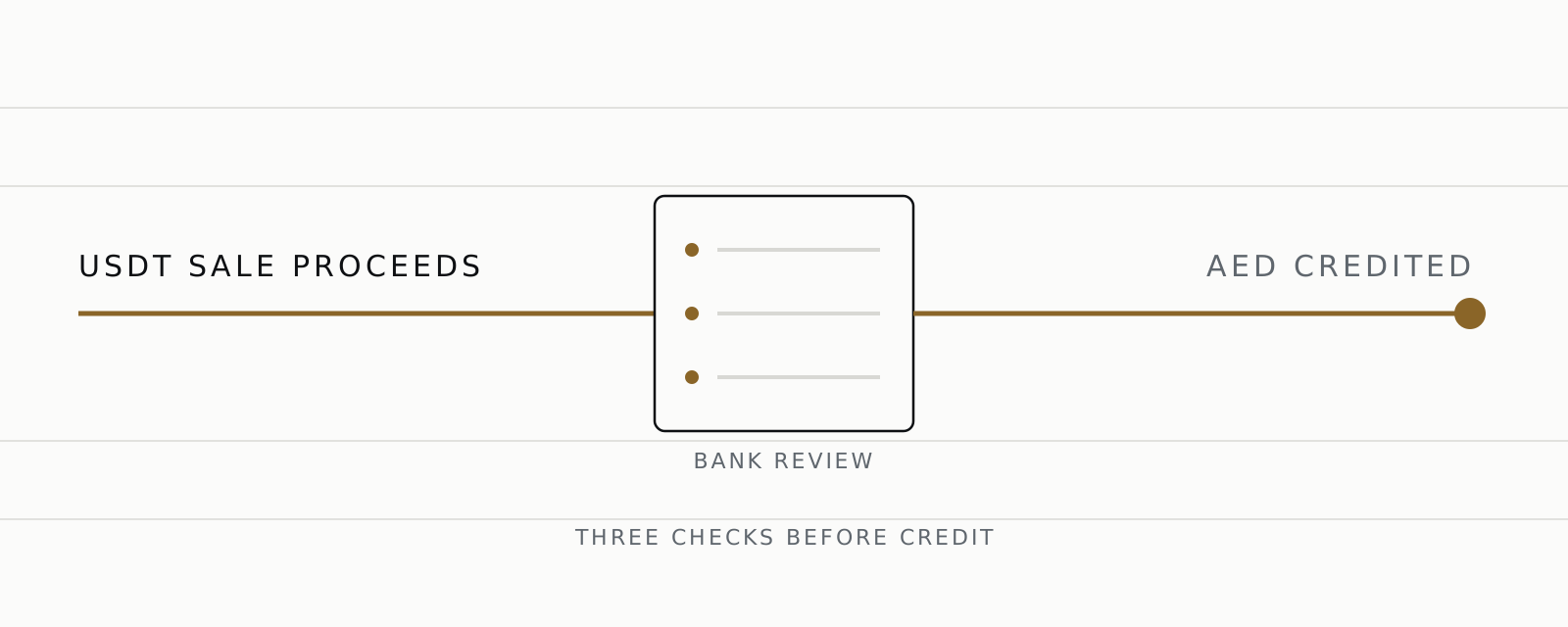
Receiving crypto-sale proceeds at First Abu Dhabi Bank: what FAB checks
First Abu Dhabi Bank (FAB) reviews an incoming crypto-sale transfer like any large inbound wire: sender identity, payment reference, and whether the amount fits your account history. Prepare a trade confirmation and a source-of-funds file before you trade, and expect extra questions on a first large credit or an unclear sender.
KEY FACTS
| Bank conduct regulator | Central Bank of the UAE (CBUAE) |
|---|---|
| AML legal basis | Federal Decree-Law No. 10 of 2025, in force since 14 October 2025 |
| FAB same-day local transfer cut-off | Before 4pm on a working day, per FAB's own published rule |
| IWGT minimum ticket | From around 100,000 USDT |
| AED settlement to FAB | Same business day (UAEFTS) |
| USD settlement to FAB | 2–5 business days (SWIFT) |
Source: CBUAE Rulebook, FAB transfers page and IWGT pricing bands, as of September 2026.
What does First Abu Dhabi Bank check on an incoming crypto-sale transfer?
First Abu Dhabi Bank checks an incoming crypto-sale credit the same way UAE banks screen any crypto-linked inflow: sender identity, stated purpose, and a plausible paper trail. It also matches the sender's name against the beneficiary and compares the amount against your normal account activity, under UAE anti-money-laundering rules.
The test behind every check is source of funds: whether the credit traces to a transaction the bank can understand. A wire from a licensed OTC desk's corporate account, carrying a trade reference, reads differently to one from an unfamiliar wallet-linked entity. Under Federal Decree-Law No. 10 of 2025, in force since 14 October 2025, UAE banks must apply risk-based due diligence to large or unusual transactions.
What documents should you prepare before the FAB transfer lands?
The documents First Abu Dhabi Bank is likely to request fall into two groups: proof of identity, and proof of where the money came from. Preparing both before you trade removes the most common cause of delay: a bank query with no ready answer. Our own onboarding document list follows the same logic, before a trade rather than after.
- Trade confirmation from the licensed desk or exchange, showing amount, rate and settlement account.
- A one-page source-of-funds note: how you acquired the crypto sold — salary, business proceeds or a prior investment.
- Exchange statements or on-chain transaction history for the specific holding sold.
- For a company: trade licence, register of beneficial owners, and a signed payment mandate.
- Passport or Emirates ID, plus proof of address issued within 90 days, for a personal account.
Building this file once turns a bank query into a formality rather than a delay. Our guide to assembling a source-of-funds file for crypto proceeds covers the same evidence in more depth.
Personal FAB account vs corporate FAB account: what's different
A personal First Abu Dhabi Bank account and a corporate one sit under the same anti-money-laundering law, but FAB asks for different evidence at each. A personal account ties the review to one individual's declared income and wealth; a corporate account adds ownership structure, trade licence activity, and who is authorised to instruct payments.
| What FAB checks | Personal account | Corporate account |
|---|---|---|
| Primary identity document | Passport or Emirates ID | Trade licence plus Emirates ID of signatories |
| Ownership evidence | Not applicable | Register of beneficial owners |
| Source-of-funds file | Personal income or asset-sale trail | Sale agreement, invoice trail or board resolution |
| Who can receive the wire | Only the account holder's own name | Only the company's own registered account |
| Typical extra trigger | First-time large personal credit | New signatory or layered ownership |
A corporate account usually faces more document requests but less scrutiny on the amount, since the company's activity already explains a large credit.
Why would FAB place a crypto-linked credit on hold?
A hold on a crypto-linked credit at First Abu Dhabi Bank usually means automated screening flagged something compliance wants explained, not that the transfer is rejected. Common triggers include a first-time large credit with no transaction history, an unclear payment reference, or a sending account the bank cannot identify. A hold is a request for evidence, resolved by supplying the trade confirmation and source-of-funds note you already have ready.
Structuring — splitting one large sale into smaller transfers to dodge a perceived review level — is itself a red flag, not a way around one. So is a mismatched sending name: a licensed desk, and FAB, settle only to your own-name account. Clearing a hold is usually a matter of days once the file is complete.
Does it matter that FAB is headquartered in Abu Dhabi, not Dubai?
First Abu Dhabi Bank is headquartered in Abu Dhabi, but the anti-money-laundering rules it applies are federal, not emirate-specific — the CBUAE framework binds every UAE bank the same way. What differs by emirate is which regulator licenses the counterparty selling you the crypto, not which checks FAB runs on receipt. A Dubai desk answers to VARA; an Abu Dhabi seller may instead use an FSRA-licensed firm inside ADGM.
The practical differences between the two regimes are covered in our comparison of Dubai vs Abu Dhabi crypto rules. Either route settles into FAB the same way: by UAEFTS, the same business day, to an account in your own name.
How do you avoid a delay when crypto proceeds land at FAB?
Avoiding a delay when crypto-sale proceeds land at First Abu Dhabi Bank starts before you trade. A complete file and a matching account name resolve most checks without a follow-up call.
- Trade only through a licensed counterparty and keep the written confirmation on file.
- Match the settlement account name exactly to your KYC name — never a third-party account.
- Tell your relationship manager in advance of a first large credit, with the expected amount.
- Keep the source-of-funds file ready rather than assembling it after a query arrives.
- Expect closer questions on transfers large enough to trigger enhanced due diligence on large crypto conversions.
IWGT settles AED to FAB, or any other UAE bank, by UAEFTS the same business day once your account is approved, at a spread published in our pricing bands. The desk trades under VARA licence VL/24/12/002 and pays only to your own-name account.
FAQ
What does First Abu Dhabi Bank check when crypto-sale proceeds arrive by wire?
FAB checks the sender's identity, the payment reference, and whether the amount matches your account activity, under CBUAE anti-money-laundering rules. A wire from a licensed OTC desk with a clear trade reference clears faster than one from an unfamiliar wallet-linked entity.
Do I need different documents for a personal FAB account than a corporate one?
Yes. A personal account needs a passport or Emirates ID, proof of address and a source-of-funds note; a corporate account adds the trade licence, register of beneficial owners and a payment mandate.
Why did FAB put a hold on my crypto-sale transfer?
A hold usually means screening flagged a first-time large credit, an unclear payment reference, or a mismatched sender name, and compliance wants an explanation before releasing the funds. It is a request for evidence, not a rejection.
Does it matter that I sell through a Dubai desk but bank with FAB in Abu Dhabi?
No. UAEFTS is federal, so AED reaches FAB on the same business day as a Dubai bank. What matters is which regulator licenses your counterparty — VARA in Dubai or FSRA in ADGM — not where FAB's head office sits.
Sell USDT and settle to FAB the same business day
IWGT is a VARA-licensed Broker-Dealer in Dubai (licence VL/24/12/002). We issue one written quote, settle AED by UAEFTS to FAB or any UAE bank the same business day, and pay only to your own-name account.
SOURCES
- CBUAE Rulebook — Federal Decree-Law No. 10 of 2025 on anti-money laundering, accessed 17 September 2026.
- First Abu Dhabi Bank — transfers and remittances, accessed 17 September 2026.
- Central Bank of the UAE — UAE Funds Transfer System (UAEFTS), accessed 17 September 2026.
- VARA public register — licence status check, accessed 17 September 2026.
- IWGT published pricing bands and onboarding requirements — this site, September 2026.
This guide is informational and is not legal, tax or investment advice, nor an invitation to buy or sell any virtual asset. It is not an official statement from First Abu Dhabi Bank and describes general UAE bank practice, not internal FAB policy. Rules and figures are as of September 2026 — re-check the sources before acting. Virtual assets may lose their value in full or in part and are subject to extreme volatility.