
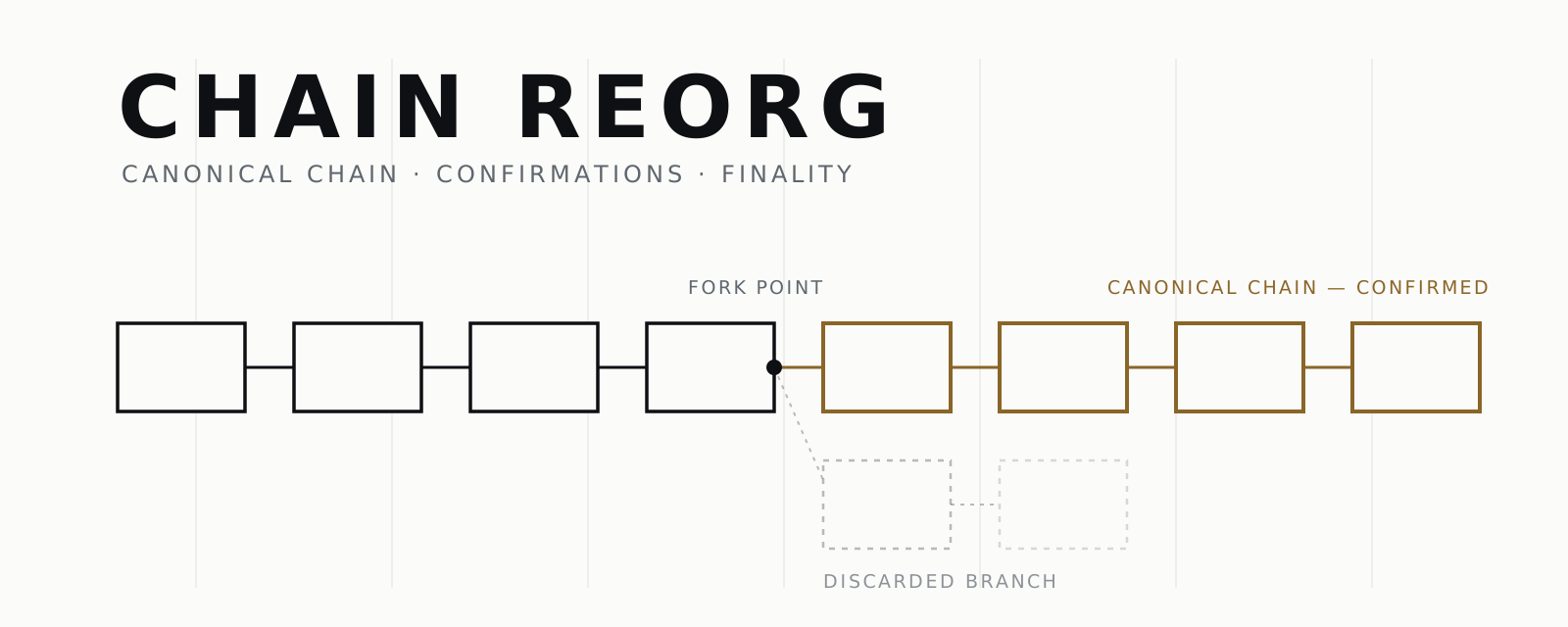
What is a chain reorganisation (reorg)?
A chain reorganisation ("reorg") happens when a node's view of the canonical blockchain changes because a competing branch overtakes the one it had been following, so blocks — and the transactions inside them — that looked confirmed get replaced. It is the reason a licensed desk waits for confirmations before treating a USDT deposit as final.
KEY FACTS
| Full name | Chain reorganisation ("reorg") |
|---|---|
| What changes | The chain a node treats as canonical, when a competing branch overtakes it |
| Effect on transactions | Transactions in the replaced blocks can revert: usually re-included, but not always in order, and not always at all |
| Highest exposure | Early-generation, low-hashrate proof-of-work chains, in their most recent block or two |
| Lowest exposure at settlement depth | Tron (delegated proof-of-stake) and Ethereum post-Merge (Casper FFG finality) |
| Desk response | Wait for a network-appropriate confirmation count before crediting a deposit as final |
Source: Bitcoin.org Developer Guide; ethereum.org consensus documentation; TRON protocol documentation, as of September 2026.
How a reorg happens
Two miners or validators can produce a valid block for the same position at nearly the same moment, and the network needs time to converge on one branch: the longer chain under proof-of-work, the more heavily attested one under proof-of-stake. A transaction in a discarded block usually returns to the pending pool and is re-included within a few blocks, but not always in the same position, and not at all if it conflicts with a transaction already confirmed on the winning branch.
Reorg risk by network
Consensus design decides how costly a competing chain is to build. Bitcoin-style proof-of-work has no formal finality: reversal risk only falls with each confirmation. Ethereum post-Merge finalises checkpoints, and reverting one means destroying a large share of staked ETH. Tron solidifies a block once 19 of its 27 active Super Representatives have built on it, about a minute at 3-second blocks, as of September 2026, so a deep reorg at settlement depth is impractical; BNB Chain's bonded validator set gives a similar profile.Settlement finality and confirmation count are related, not identical; minutes per network are in USDT settlement times by network.
Why it matters when selling USDT in the UAE
If a desk paid AED against USDT that a reorg later removed from the chain, the desk would carry the shortfall, one of the failure modes in OTC settlement failures. A licensed desk therefore sets a confirmation threshold per network and starts its stated settlement time once the deposit is final, not when it first appears on an explorer; that wait is part of the AED payout time set out at onboarding, not added afterwards.
FAQ
Does a chain reorganisation mean my USDT transaction is lost?
Not in most cases. It usually returns to the pending pool and is re-included within the next few blocks, though not always in the same position or at all if it now conflicts with an already-confirmed transaction.
Can a chain reorganisation happen on Tron or BNB Chain?
It is possible on any blockchain in principle, but at settlement depth it is effectively unheard of on Tron's delegated proof-of-stake design, and rare on BNB Chain's proof-of-staked-authority design — a different profile from an early, low-hashrate proof-of-work chain.
Why doesn't a desk credit a USDT deposit the moment it appears?
A transaction that has only just appeared, in the mempool or the first block after broadcast, has the fewest confirmations and the highest reorganisation risk of its life. Waiting for the network's confirmation count turns probably settled into settled.
Does waiting for confirmations slow down my payout?
No, not against the settlement time you were quoted. The wait is already built into the desk's stated AED settlement time, so it adds no delay on top of what you were told to expect.
Sell USDT to a desk that waits for real finality
IWGT is a VARA-licensed Broker-Dealer in Dubai (VL/24/12/002). Deposits are credited once they clear the network's confirmation threshold, then AED settles by UAEFTS the same business day.
SOURCES
- Bitcoin.org Developer Guide — the block chain and confirmations, accessed 19 September 2026.
- ethereum.org — proof-of-stake finality (Casper FFG), accessed 19 September 2026.
- TRON Developer Hub — glossary: Solidification (a block is solidified once at least 2/3+1, i.e. 19 of 27, active SRs have built on it), accessed 21 September 2026.
- TRON Developer Hub — architecture overview (3-second blocks; solidified after 19 distinct SRs, about one minute), accessed 21 September 2026.
- IWGT — USDT settlement times by network, September 2026.
This guide is informational and is not legal, tax or investment advice, nor an invitation to buy or sell any virtual asset. Rules and figures are as of September 2026 — re-check the sources before acting. Virtual assets may lose their value in full or in part and are subject to extreme volatility.