
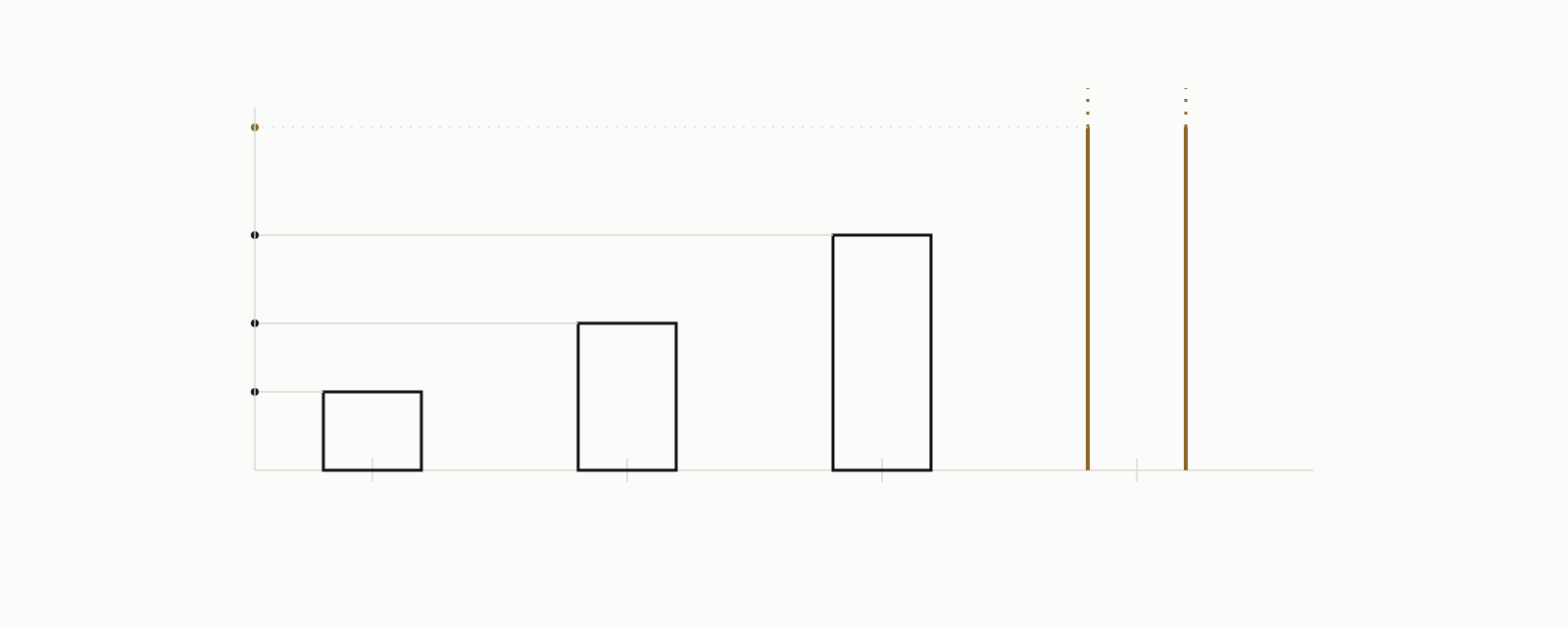
How much USDT can you sell at once in the UAE, and what changes at each size
A licensed OTC desk does not publish a hard ceiling on USDT sales, unlike an exchange's withdrawal limit. Capacity scales with the desk's liquidity arrangements instead. What changes as size rises is the spread, the documentation required, and how settlement is handled — not whether the desk will trade with you.
KEY FACTS
| Spread by ticket size | 0.40% at 100k, 0.25% at 500k, 0.15% at 2m, 0.08% at 10m+ USDT |
|---|---|
| EDD threshold behaviour | Enhanced due diligence and source-of-funds evidence apply above set thresholds |
| Published hard ceiling | None — capacity is negotiated case by case above certain sizes |
| Typical largest single tickets | Multi-million-dollar tickets are routine; very large sizes are arranged with the desk in advance |
| AED settlement | Same business day via UAEFTS, coordinated with the bank in advance for very large transfers |
| Source | IWGT published pricing bands, as of September 2026 |
Source: IWGT published pricing bands, as of September 2026.
Is there a maximum amount of USDT you can sell in the UAE?
IWGT, a VARA-licensed OTC desk in Dubai, publishes no maximum ticket size for selling USDT. An exchange enforces a fixed daily withdrawal limit on its platform; a licensed desk instead deals against its own liquidity and banking relationships, so capacity flexes with each trade.
That does not mean every size is quoted instantly. Above certain thresholds a trade needs more paperwork, a closer conversation with the desk, and sometimes a settlement plan spread across more than one transfer. See our guide on selling USDT in large amounts for the general process large tickets follow.
How does ticket size change the spread you pay?
IWGT's spread narrows as ticket size grows: 0.40% at 100,000 USDT, 0.25% at 500,000 USDT, 0.15% at 2,000,000 USDT, and 0.08% at 10,000,000 USDT and above. The spread is the desk's margin on top of the AED peg, published openly in our pricing bands, not a separate hidden fee.
The table below sets out what changes at each tier — spread, documentation and the settlement note that applies.
| Ticket size | Spread | Documentation | Settlement note |
|---|---|---|---|
| 100,000 – 500,000 USDT | 0.40% | Standard onboarding, source-of-funds declaration | AED same business day via UAEFTS |
| 500,000 – 2,000,000 USDT | 0.25% | Documented source of funds, enhanced review | AED same business day; larger wires flagged to the bank ahead of time |
| 2,000,000 – 10,000,000 USDT | 0.15% | Full enhanced due diligence, documented fund origin | AED same day, coordinated with the bank in advance |
| 10,000,000+ USDT | 0.08% | Full EDD plus desk risk review; may be split across settlements | Same-day AED, staged through the day or across sessions |
Spread falls as size rises, but each tier up adds a documentation step rather than removing one.
For a full breakdown of what a specific ticket costs in AED, see our guide on the cost of selling 10 million USDT — this page answers the ceiling question, not the invoice.
What documentation does a larger USDT ticket require?
Enhanced due diligence, known as EDD, is the extra layer of checks a desk applies once a ticket crosses a set size threshold. It typically means a documented source-of-funds trail, not just a declaration, plus a closer look at the wallet history behind the coins.
A ticket at the 100,000 USDT entry tier usually clears with standard onboarding. A ticket in the millions typically needs bank statements, an exchange trade history, or a company's audited accounts, depending on where the USDT came from. Our guide to enhanced due diligence on large crypto conversions sets out the document list by scenario.
Confirm exactly what your tier needs before you trade, not after. The requirements for each step are listed in our onboarding section, so there are no surprises once a ticket crosses a threshold.
Can I sell more than one ticket in a day, or is there a weekly limit?
IWGT does not cap the number of tickets a client sells in a day or a week. Clients running a recurring OTC programme often split a large position into several trades rather than a single ticket, for pricing and liquidity reasons rather than any published limit.
Multiple trades in the same week still add up for compliance purposes. The desk looks at total volume from one client over a period, not just the size of a single ticket, when it decides how much extra documentation to ask for.
How does settlement work for very large AED transfers?
AED settlement for a USDT sale goes out the same business day through UAEFTS, the UAE's national funds transfer system, regardless of ticket size. For very large transfers the desk coordinates the payment with the client's bank in advance, so the receiving bank is not surprised by a large same-day credit.
USD settlement follows SWIFT and takes two to five business days at any size. A dealer confirms the settlement plan before you send any USDT, while your quote is still within its validity window, so there is no ambiguity about timing once you trade.
When does a desk split a trade across multiple settlements?
A desk splits a single client position across more than one settlement when the size outpaces same-day liquidity at the quoted spread, or when a receiving bank sets its own limit on a single incoming wire. Splitting is a liquidity and risk decision, not a rule a client can opt out of.
In practice this affects a small share of tickets, mostly those well above the 10,000,000 USDT tier. It differs from why exchanges fail large orders outright — an exchange runs out of order-book depth, while a desk simply stages settlement over the day or across sessions.
If your ticket is likely to cross a tier, request a quote before you send anything. The desk confirms in writing which spread and settlement plan applies to your exact size.
The bottom line on USDT sale limits in the UAE
There is no advertised ceiling on how much USDT you can sell through a licensed UAE desk, and no daily or weekly cap on the number of tickets. What changes at each size is the spread, the depth of due diligence, and sometimes the settlement plan — negotiated with the desk case by case above certain thresholds, never guaranteed in advance.
FAQ
Is there a maximum amount of USDT I can sell in one trade?
No published maximum exists at a licensed OTC desk. Capacity depends on the desk's liquidity at the time and on completed due diligence, so very large tickets are agreed with the desk directly rather than quoted against a fixed limit.
Does the price improve if I sell a larger amount of USDT?
Yes. IWGT's spread falls from 0.40% at 100,000 USDT to 0.08% at 10,000,000 USDT and above, because larger tickets are more efficient for the desk to hedge and settle.
What extra checks apply to very large USDT sales?
Larger tickets trigger enhanced due diligence: a documented source-of-funds trail, a review of wallet history, and sometimes supporting bank or company records, in addition to standard onboarding checks.
Can I sell 10 million USDT and still get paid the same day?
Usually yes. AED settlement goes out the same business day via UAEFTS at any size, though the desk coordinates very large transfers with the receiving bank in advance.
Is there a daily or weekly limit on how much I can sell?
IWGT does not cap daily or weekly volume. Clients selling large positions often split them into several tickets over days for pricing reasons, not because of any published limit.
Why would a desk split my trade into more than one settlement?
A desk splits a trade when the size outpaces same-day liquidity at the quoted spread, or when a receiving bank sets its own limit on a single incoming wire.
Selling a large USDT position? Talk to the desk directly
IWGT prices tickets from 100,000 USDT upward, with spread from 0.08% to 0.40% by size. Request a quote for your exact amount — we will tell you plainly what documentation and settlement plan it needs.
SOURCES
- VARA public register — licence status check, accessed 16 September 2026.
- Central Bank of the UAE — payment systems (UAEFTS), accessed 16 September 2026.
- IWGT published pricing bands and onboarding requirements — IWGT published pricing bands, September 2026.
This guide is informational and is not legal, tax or investment advice, nor an invitation to buy or sell any virtual asset. Rules and figures are as of September 2026 — re-check the sources before acting. Virtual assets may lose their value in full or in part and are subject to extreme volatility.