
What is an IBAN?
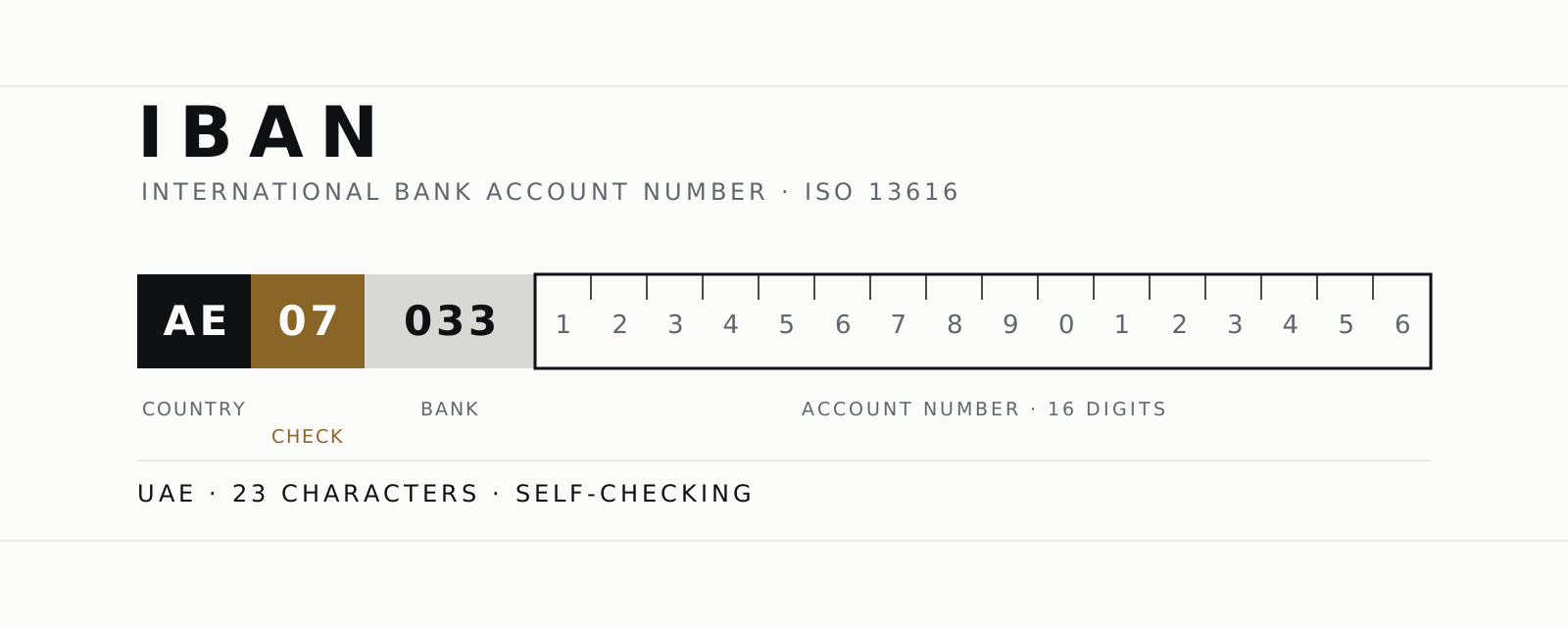
An IBAN is an International Bank Account Number — the ISO 13616 standard format that identifies a specific bank account for electronic payments. In the UAE it is 23 characters long and starts with the country code AE; banks have required a valid IBAN for dirham transfers since April 2012.
KEY FACTS
| Full name | International Bank Account Number (IBAN) |
|---|---|
| Standard | ISO 13616; check digits per ISO/IEC 7064 (MOD 97-10) |
| UAE length | 23 characters, always starting with AE |
| UAE structure | AE + 2 check digits + 3-digit bank identifier + 16-digit account number |
| Required in the UAE | For electronic AED transfers since 12 April 2012 |
| Where to find it | Bank statement, mobile banking app, chequebook |
Source: Central Bank of the UAE, IBAN page, as of September 2026.
How is a UAE IBAN structured?
A UAE IBAN is 23 characters: the country code AE, two check digits, a three-digit bank identifier and a 16-digit account number, zero-padded if the domestic number is shorter. The Central Bank of the UAE defines the structure under ISO 13616; only your bank can issue your IBAN.
The check digits make the number self-verifying: the sending bank runs the MOD 97-10 check and rejects the payment if the arithmetic fails, so a mistyped character stops the wire at initiation. An IBAN is your existing account written in ISO format; each account you hold, including the salary account paid through the Wages Protection System, has its own. Since 12 April 2012 banks process electronic dirham transfers only when the IBAN is valid, as of September 2026.
Why it matters when selling USDT in the UAE
Your IBAN is where the dirhams land: a licensed desk pays AED over UAEFTS to an account in your own name, from its own corporate account. A UAE IBAN means a domestic payment that arrives whole and the same business day; settling in US dollars instead means a SWIFT wire of two to five business days with correspondent fees deducted. The IBAN goes into your settlement instructions once, at onboarding: copy it from a statement rather than retyping it.
Illustrative example
You sell 500,000 USDT at the 3.6725 peg: gross AED 1,836,250. At a 0.25% spread, within the published 0.08% to 0.40% bands in the pricing section as of September 2026, the cost is about AED 4,591 and AED 1,831,659 is paid over UAEFTS to the IBAN confirmed at onboarding.
FAQ
Is an IBAN the same as my account number?
No. The IBAN contains your account number — as the last 16 digits in the UAE — and adds the country code, two check digits and the bank identifier around it. Your existing account number stays valid; the IBAN is the same account written in ISO-standard form.
Can I receive AED without an IBAN?
No. Since 12 April 2012 UAE banks process electronic dirham transfers only when the beneficiary has a valid IBAN. A transfer instructed without one can be rejected before it moves, and the sending bank may charge a rejection fee, as of September 2026.
What happens if I mistype an IBAN?
The two check digits catch almost every typo: the sending bank runs the MOD 97-10 check and refuses the payment before any money moves. The dangerous case is a valid IBAN that belongs to someone else — copy the string, never retype it.
Do I need a SWIFT code as well as an IBAN?
For a domestic AED payment, no: the IBAN alone routes it over UAEFTS. For a US-dollar wire from abroad the sender also needs your bank's SWIFT/BIC code, and that payment takes two to five business days with correspondent fees deducted along the way.
One IBAN, one wire, same day
IWGT is a VARA-licensed Broker-Dealer in Dubai (VL/24/12/002). All-in spread 0.08–0.40% by ticket size, published openly; AED goes out over UAEFTS to your own-name IBAN the same business day once your account is approved.
SOURCES
- Central Bank of the UAE — IBAN standard and FAQ, accessed 11 September 2026.
- Central Bank of the UAE — payment systems (UAEFTS), accessed 11 September 2026.
- IWGT published pricing bands and onboarding requirements — IWGT published pricing bands, September 2026.
This guide is informational and is not legal, tax or investment advice, nor an invitation to buy or sell any virtual asset. Rules and figures are as of September 2026 — re-check the sources before acting. Virtual assets may lose their value in full or in part and are subject to extreme volatility.